
Learn how to improve your college grades and qualify for scholarships in 2026 with effective study tips, eligibility requirements, and application guidance.
College is an important stage in a student’s academic journey. Good grades can help students build a strong academic profile, develop valuable skills, and explore opportunities for higher education. However, managing assignments, examinations, projects, and personal responsibilities can sometimes be challenging. At the same time, college expenses can create financial pressure for students and their families.
The good news is that students can improve their academic performance by following effective study strategies and developing consistent learning habits. They can also explore scholarships that provide financial assistance based on academic merit, family income, category, course, or other eligibility requirements.
In 2026, students in India have several ways to research educational funding opportunities and improve their college experience. Understanding scholarship requirements, planning study schedules, and preparing applications early can help students make informed decisions.
This guide explains how to improve college grades, develop better study habits, identify suitable scholarships, and prepare a strong scholarship application.
Why Are Good College Grades Important?
Good grades can play an important role in a student’s educational journey. Although academic marks are not the only measure of success, they can help demonstrate a student’s understanding of their subjects and commitment to learning.
Better Academic Opportunities
Students who maintain strong academic performance may be better positioned to apply for postgraduate programmes, competitive courses, and certain academic opportunities. Some institutions also consider previous academic results during admission.
Eligibility for Merit-Based Scholarships
Certain scholarships consider academic performance when selecting applicants. Students may need to meet a minimum percentage, maintain a particular grade point average, or satisfy other academic conditions.
However, not every scholarship is based entirely on marks. Some programmes focus on financial need, social background, disability, or other specific eligibility criteria.
Improved Knowledge and Confidence
Regular studying helps students understand concepts more clearly and prepare for examinations with greater confidence. Strong subject knowledge can also be useful during interviews, internships, and future employment.
Better Career Preparation
Good academic habits can help students develop discipline, time management, problem-solving abilities, and independent learning skills. These qualities are valuable in both higher education and professional life.
How to Improve Your College Grades in 2026
Improving college grades does not necessarily require studying for long hours every day. A well-planned study routine, active learning, and regular revision can make learning more effective.
Create a Realistic Study Timetable
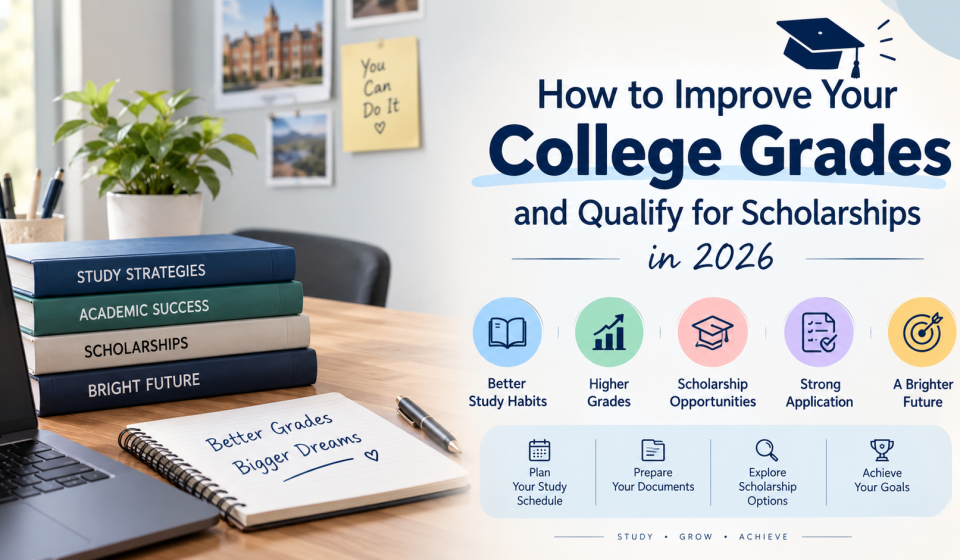
A study timetable helps students organise their time and understand which subjects require more attention.
Start by listing all your subjects, upcoming examinations, assignments, and project deadlines. Identify difficult topics and allocate additional study time to them.
For example, a student might spend 45 minutes revising a difficult subject, 30 minutes practising questions, and another 30 minutes completing an assignment.
Keep your timetable realistic. Include breaks, college hours, meals, and adequate sleep so that the routine remains manageable.
Set Clear Academic Goals
Setting specific goals makes it easier to measure progress.
Instead of saying, “I want to study more,” create a measurable target such as completing two chapters this week or practising 20 questions before the next test.
You can divide your goals into three categories:
- Daily goals: Complete notes, revise a topic, or practise questions.
- Weekly goals: Finish a chapter, review class notes, or complete an assignment.
- Semester goals: Improve subject grades, complete projects, and maintain consistent academic progress.
Review your progress every week and adjust your plan when necessary.
Use Active Learning Techniques
Simply reading textbooks repeatedly may not always help you remember information. Active learning encourages you to recall and apply what you have studied.
Useful techniques include:
- Active recall: Close your textbook and explain a concept from memory.
- Practice questions: Solve previous examination questions and sample papers.
- Flashcards: Use question-and-answer cards to remember definitions and important concepts.
- Teaching method: Explain a topic to a friend or pretend you are teaching a class.
- Mind maps: Connect related ideas using diagrams and short notes.
These techniques can help you identify knowledge gaps before examinations.
Revise Regularly Instead of Studying at the Last Minute
Leaving all revision until the day before an examination can increase stress and make it difficult to remember information.
Try reviewing new material on the same day you learn it. Revisit it after a few days and again the following week.
This approach, known as spaced repetition, distributes revision across time instead of concentrating it into one session.
Maintain short notes containing important definitions, formulas, examples, and key points. These notes can make examination preparation more organised.
Attend Classes and Ask Questions
Regular attendance can help you understand concepts, receive important instructions, and stay updated about assignments and examinations.
If a topic is unclear, ask your teacher or lecturer for an explanation. You can also discuss difficult concepts with classmates or use reliable educational resources.
Do not wait until the examination period to resolve major doubts. Understanding a concept early can make later revision easier.
Improve Assignment and Project Performance
Assignments, practical work, presentations, and projects may contribute to your overall academic results.
Read the instructions carefully before starting any task. Understand the marking criteria, prepare your work early, and check for mistakes before submission.
For presentations and practical projects, practise explaining your work in simple language. This can improve your confidence and help you prepare for viva examinations.
Always submit assignments before the deadline and follow your institution’s academic integrity rules.
Analyse Your Previous Examination Results
Examination results can help you identify areas that need improvement.
After receiving your marks, review the questions you answered incorrectly. Determine whether the problem involved misunderstanding a concept, insufficient practice, poor time management, or careless mistakes.
Prepare an improvement plan based on these observations.
For example, if you lose marks because your answers lack detail, practise writing structured answers with definitions, explanations, examples, and conclusions.
How to Manage Your Time Between College and Scholarship Applications
Scholarship applications require attention to eligibility conditions, documents, deadlines, and application forms. Students should manage these responsibilities alongside their studies.
Create a Scholarship Application Calendar
Maintain a calendar containing scholarship names, application opening dates, closing dates, required documents, and renewal deadlines.
Check official scholarship websites regularly because deadlines and requirements may change.
Prepare Documents in Advance
Depending on the scholarship, students may need documents such as:
- Previous examination marksheets.
- College admission or enrolment details.
- Identity documents.
- Income certificate.
- Caste or category certificate, where applicable.
- Domicile or residence certificate, where required.
- Bank account details.
- Passport-size photographs.
Not every scholarship requires every document. Always follow the current official instructions for the specific scheme.
Avoid Last-Minute Applications
Complete applications early whenever possible. This gives you time to correct errors, obtain missing documents, and resolve technical problems.
Set aside a short period each week to check application progress without interrupting your main study routine.
Types of Scholarships College Students Can Explore in 2026
Students should understand the different types of scholarships before applying. The most suitable opportunity depends on individual circumstances and the specific scheme’s eligibility criteria.
Merit-Based Scholarships
Merit-based scholarships recognise academic achievement. Depending on the programme, eligibility may depend on Class 12 marks, college examination results, entrance examination scores, or other academic requirements.
Students interested in these opportunities should check the minimum marks and renewal conditions carefully.
Need-Based Scholarships
Need-based scholarships provide financial assistance to eligible students who face financial difficulties.
These programmes may consider annual family income, supporting documents, educational expenses, and other conditions.
Students should ensure that the income information and documents submitted in their applications are accurate.
Government Scholarships
Central and state governments offer different scholarship schemes for eligible students. The requirements can vary according to the student’s course, institution, residence, family income, academic performance, and other factors.
In India, the National Scholarship Portal is an important starting point for researching participating government scholarship schemes.
Students can visit the official website to explore available schemes, review eligibility requirements, and check application information:
National Scholarship Portal: https://scholarships.gov.in/
College and University Scholarships
Some colleges and universities provide financial assistance, fee concessions, or merit awards to eligible students.
Contact your college administration or scholarship office to ask about available opportunities. Check whether applications are automatic or require a separate form.
Private and Corporate Scholarships
Some foundations, charitable organisations, and companies support students through educational scholarships.
Their selection criteria may include academic results, family income, course requirements, personal achievements, or specific eligibility conditions.
Research the organisation carefully and use its official application website. Be cautious of anyone promising guaranteed scholarship approval in exchange for an unexplained payment.
How to Qualify for Scholarships in 2026
There is no single eligibility rule that applies to every scholarship. However, students can take several practical steps to identify and prepare for suitable opportunities.
Step 1: Research Scholarships That Match Your Profile
Search for scholarships based on your current course, academic year, state, family income, academic results, and other relevant criteria.
Read the official eligibility requirements before starting an application.
Do not assume that a scholarship is available to every college student simply because it appears in an online search.
Step 2: Maintain Consistent Academic Performance
If you are interested in merit-based scholarships, work towards meeting the required academic standards.
Attend classes, complete assignments, revise regularly, and prepare for examinations well in advance.
Some schemes also require students to pass every subject or achieve specific marks to renew their scholarships. Review these conditions before applying.
Step 3: Keep Your Documents Accurate
Ensure that your name, course details, bank information, income information, and other application details are consistent with the relevant official documents.
If you find an error, follow the official correction process rather than submitting inaccurate information.
Step 4: Complete the Application Carefully
Read every section of the application form before submitting it. Upload documents in the requested format and check that all information is correct.
Save the application reference number and acknowledgement receipt if provided.
Step 5: Track Your Application Status
After submitting an application, check its status through the official portal.
Some scholarships require verification by the educational institution or another authorised department. If your application is returned for correction, follow the instructions within the permitted period.
Step 6: Understand Scholarship Renewal Rules
Receiving a scholarship for one academic year does not always guarantee continued financial assistance.
Some schemes require a renewal application, minimum marks, satisfactory academic progress, continued enrolment, or updated documents.
Keep track of renewal deadlines and review the official rules every academic year.
Common Mistakes Students Should Avoid
Students can improve their chances of submitting a complete application by avoiding these common mistakes.
Ignoring eligibility requirements: Applying without checking course, income, academic, or residency conditions can waste time.
Missing deadlines: Late applications may not be accepted, even when a student meets the eligibility criteria.
Submitting incorrect information: Errors in personal details, marks, or supporting documents can delay verification or lead to rejection.
Relying on a single scholarship: Research multiple suitable opportunities rather than assuming that one application will provide financial assistance.
Neglecting college studies: Scholarship research is important, but students should continue attending classes, preparing for examinations, and completing assignments.
Trusting unofficial promises: Avoid suspicious websites or individuals claiming they can guarantee scholarship approval. Verify application details through official sources.
A Simple Weekly Plan for Academic and Scholarship Success
A weekly plan can help students balance academic preparation with scholarship research.
Monday to Friday: Attend classes, review notes, complete assignments, and spend time practising difficult subjects.
Saturday: Revise the week’s topics, solve practice questions, and identify subjects that need additional attention.
Sunday: Plan the next week’s studies, review upcoming deadlines, and spend a short period researching relevant scholarships.
You can adapt this schedule to your college timetable, examination dates, and personal responsibilities.
The most important goal is consistency. A manageable routine followed regularly is often more useful than an unrealistic timetable that is difficult to maintain.
source
https://sl1nk.com/odufwp9
https://l1nq.com/xb0evon
Conclusion
Improving college grades and qualifying for scholarships in 2026 requires planning, consistent effort, and accurate information. Students can strengthen their academic performance by following a realistic study timetable, using active learning techniques, revising regularly, and learning from examination mistakes.
At the same time, researching merit-based, need-based, government, institutional, and private scholarships can help students discover financial assistance opportunities that match their circumstances.
Start by setting achievable academic goals, preparing your documents, checking official scholarship requirements, and keeping track of deadlines. Remember that eligibility rules differ between schemes, and good grades alone do not guarantee scholarship approval.
With consistent study habits and careful scholarship planning, students can make better use of educational opportunities and work towards their academic goals.
Frequently Asked Questions (FAQs)
How can I improve my college grades in 2026?
Create a realistic study timetable, attend classes regularly, practise examination questions, revise consistently, and ask for help when you do not understand a topic.
Do good college marks guarantee a scholarship?
No. Good marks may help students qualify for merit-based scholarships, but selection depends on each scheme’s eligibility criteria, available awards, and selection process.
Where can I find scholarships for college students in India?
You can start with the National Scholarship Portal at https://scholarships.gov.in/. You should also check your state government’s official scholarship website, college scholarship office, and reputable scholarship providers.
Can students with average marks apply for scholarships?
Yes, depending on the scheme. Some scholarships focus on financial need, category, disability, or other conditions rather than high academic marks alone. Students should check the specific eligibility requirements.
What documents are required for a college scholarship?
Requirements vary. Commonly requested documents may include marksheets, enrolment details, identity documents, income certificates, bank details, and category or domicile certificates where applicable.
How can I balance college studies and scholarship applications?
Use a weekly timetable, organise application deadlines in a calendar, prepare documents early, and allocate a short period for scholarship-related tasks each week.
Can I apply for more than one scholarship?
It depends on the rules of the relevant schemes. Some allow multiple applications, while others restrict receiving more than one scholarship simultaneously. Check the official conditions before applying.
What is a merit-based scholarship?
A merit-based scholarship is financial assistance awarded according to specified achievement criteria, which may include academic marks, examination results, or other accomplishments.
What should I do if my scholarship application is rejected?
Review the reason provided by the relevant authority. If corrections, an appeal, or a grievance process is available, follow the official instructions. You can also research other scholarships for which you may qualify.
When should college students apply for scholarships?
Apply during the official application period for the relevant scheme. Check deadlines regularly, prepare documents in advance, and submit the application early enough to resolve any problems.