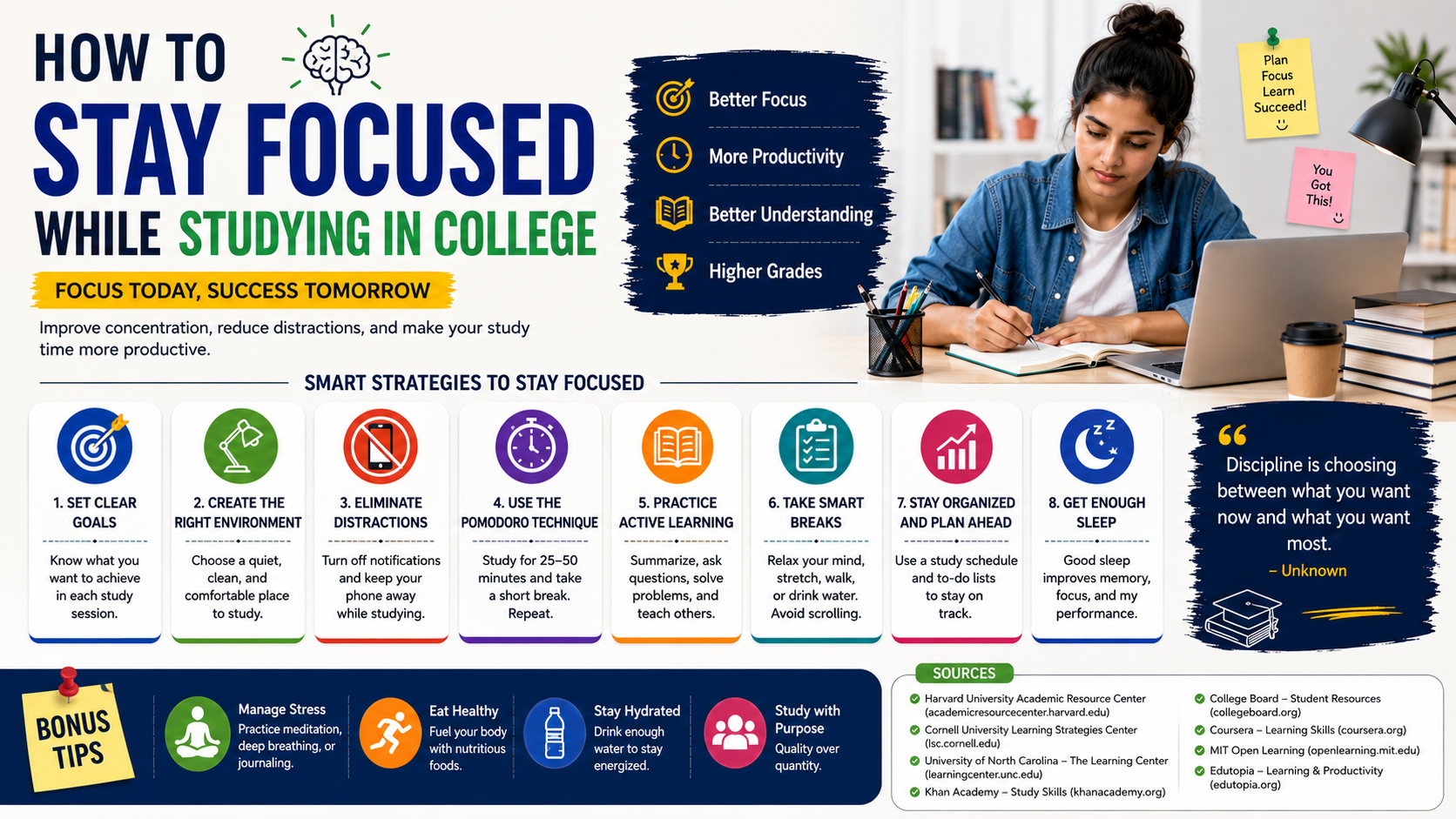

Focus is not only about sitting with books for many hours. It is about studying with full attention, understanding the topic clearly, avoiding distractions, and using time wisely. When college students learn how to stay focused, they can complete assignments faster, prepare better for exams, reduce stress, and improve academic performance.
Why Focus Matters for College Students
Focus plays a major role in academic success. When students study with concentration, they understand concepts faster and remember information longer. Focused study sessions also help students complete tasks in less time.
Many students spend hours with books open but get very little work done because they keep checking their phones, switching tabs, or thinking about other tasks. This type of distracted studying reduces learning quality. On the other hand, even one or two hours of deep focus can be more effective than many hours of unfocused study.
College subjects often require critical thinking, problem-solving, writing, research, and analysis. These tasks need mental energy and attention. That is why developing focus is one of the most important study skills for college students.
Create a Clear Study Plan
A clear study plan helps students know exactly what they need to do before they start studying. Without a plan, students may waste time deciding what to study or jump from one topic to another.
Before each study session, write down your goal. For example, your goal may be to complete one chapter, revise lecture notes, solve ten problems, or prepare an assignment outline. A specific goal gives direction and improves focus.
A weekly study schedule is also helpful. Divide subjects across different days and include revision time. Avoid making an unrealistic schedule with too many tasks. A practical plan is easier to follow and helps build consistency.
Choose the Right Study Environment
Your study environment affects your concentration. A noisy, messy, or uncomfortable place can make it difficult to focus. Choose a location where you feel calm and alert.
This may be a library, study room, quiet corner at home, or college campus space. Keep your desk clean and remove unnecessary items. Good lighting, a comfortable chair, and proper ventilation can also improve your study experience.
Some students focus better with complete silence, while others prefer soft instrumental music. Find what works best for you. The main goal is to create an environment that supports concentration and reduces distractions.
Remove Digital Distractions
Digital distractions are one of the biggest reasons college students lose focus. Phones, notifications, social media, messages, reels, and random browsing can break concentration again and again.
To stay focused, keep your phone away from your study desk. Turn on focus mode or airplane mode during study sessions. If you are using a laptop, close unnecessary tabs and avoid opening entertainment websites.
You can also use website blockers or productivity apps to limit distractions. Remember, every time you check your phone, your brain takes time to return to deep focus. Reducing digital interruptions can greatly improve study quality.
Use the Pomodoro Technique
The Pomodoro Technique is a simple and effective method for improving focus. It involves studying for a fixed period, usually 25 minutes, followed by a short 5-minute break. After four study sessions, you can take a longer break of 15 to 30 minutes.
This technique works because it makes studying feel manageable. Instead of thinking about studying for many hours, you only need to focus for one short session at a time.
College students who struggle with procrastination can benefit from this method. It helps create momentum and prevents mental fatigue. You can use a timer, phone app, or simple clock to follow this technique.
Study One Task at a Time
Multitasking may seem productive, but it usually reduces focus. Many students try to study while replying to messages, watching videos, or switching between multiple assignments. This divides attention and makes learning slower.
To study effectively, focus on one task at a time. If you are reading a chapter, only read that chapter. If you are solving problems, only solve problems. Avoid switching between subjects too quickly.
Single-tasking helps the brain process information better. It also reduces stress because you are giving full attention to one clear goal.
Take Smart Breaks
Breaks are important for maintaining focus. Studying for long hours without rest can lead to tiredness, boredom, and poor concentration. Short breaks refresh the mind and improve productivity.
During breaks, avoid activities that may become distracting, such as scrolling social media. Instead, stand up, stretch, drink water, take a short walk, or relax your eyes.
A good break should help you feel refreshed, not make it harder to return to studying. Smart breaks support longer and more effective study sessions.
Practice Active Learning
Active learning keeps your brain engaged. Instead of only reading notes again and again, interact with the material. Ask questions, summarize the topic, create examples, solve practice questions, or explain the concept in your own words.
When students use active learning, they are less likely to feel bored or distracted. It also improves understanding and memory.
For example, after reading a topic, close your book and write a short summary. Then check what you missed. This method helps you stay mentally involved and focused.
Set Small Study Goals
Large tasks can feel overwhelming and make students lose motivation. Breaking big tasks into smaller goals makes studying easier.
Instead of saying, “I will study the entire syllabus,” say, “I will complete two topics today.” Instead of “I will write the full assignment,” start with “I will create the introduction and outline.”
Small goals create a sense of progress. Every completed task builds confidence and encourages you to continue.
Keep Your Energy Levels High
Focus depends on energy. If you are tired, hungry, dehydrated, or sleepy, it becomes difficult to concentrate. College students often ignore health because of busy schedules, but health directly affects learning.
Eat balanced meals, drink enough water, and avoid studying when you are extremely tired. Regular sleep is especially important because it helps memory, attention, and problem-solving.
Light exercise, walking, or stretching can also improve energy and mood. A healthy body supports a focused mind.
Use Study Tools Wisely
Study tools can help students stay organized and focused. Planners, calendars, note-taking apps, flashcards, timers, and productivity apps can make study sessions more structured.
Digital tools are useful, but they should not become distractions. Use them only for clear academic purposes. For example, use flashcards for revision, a calendar for deadlines, or a timer for focus sessions.
In 2026, many students also use AI tools to summarize notes, create practice questions, and understand difficult topics. These tools can be helpful when used responsibly.
Avoid Last-Minute Studying
Last-minute studying creates stress and reduces focus. When students wait until the night before an exam, they often feel anxious and overwhelmed. This makes it harder to concentrate.
Instead, study regularly throughout the semester. Review notes weekly and revise important topics before exams. Consistent preparation improves confidence and keeps stress under control.
Small daily study sessions are more effective than long, stressful cramming sessions.
Build a Consistent Study Routine
A routine trains your brain to focus at specific times. When you study at the same time each day, it becomes a habit. You do not have to depend only on motivation.
Choose a study time that works best for you. Some students focus better in the morning, while others prefer evening study sessions. The key is consistency.
A strong routine helps reduce procrastination and makes studying a natural part of your college life.
Source
https://l1nq.com/yymxuxm
https://sl1nk.com/ommed6d
Conclusion
Staying focused while studying in college is a skill that can be improved with the right habits. Students do not need to study all day to succeed. They need focused study sessions, clear goals, fewer distractions, smart breaks, active learning, and a healthy routine.
By creating a study plan, choosing the right environment, removing digital distractions, using the Pomodoro Technique, and taking care of health, college students can improve concentration and academic performance. Focused studying helps students learn better, save time, reduce stress, and achieve better grades.
In college, success comes from consistency. Even small focused efforts every day can lead to big academic results over time.
FAQs
1. How can I focus better while studying in college?
You can focus better by creating a study plan, removing distractions, using a timer, studying in a quiet place, and setting small goals for each session.
2. Why do I get distracted while studying?
You may get distracted because of phone notifications, social media, tiredness, unclear goals, stress, or a noisy environment. Identifying your main distraction can help you control it.
3. Is the Pomodoro Technique useful for college students?
Yes, the Pomodoro Technique is useful because it helps students study in short focused sessions with regular breaks. It is especially helpful for students who procrastinate.
4. How long should I study without a break?
Most students can focus well for 25 to 50 minutes before taking a short break. The ideal time depends on your energy level and the difficulty of the subject.
5. How can I avoid phone distractions while studying?
Keep your phone away, turn on focus mode, disable notifications, or use app blockers. You can also keep your phone in another room during study sessions.