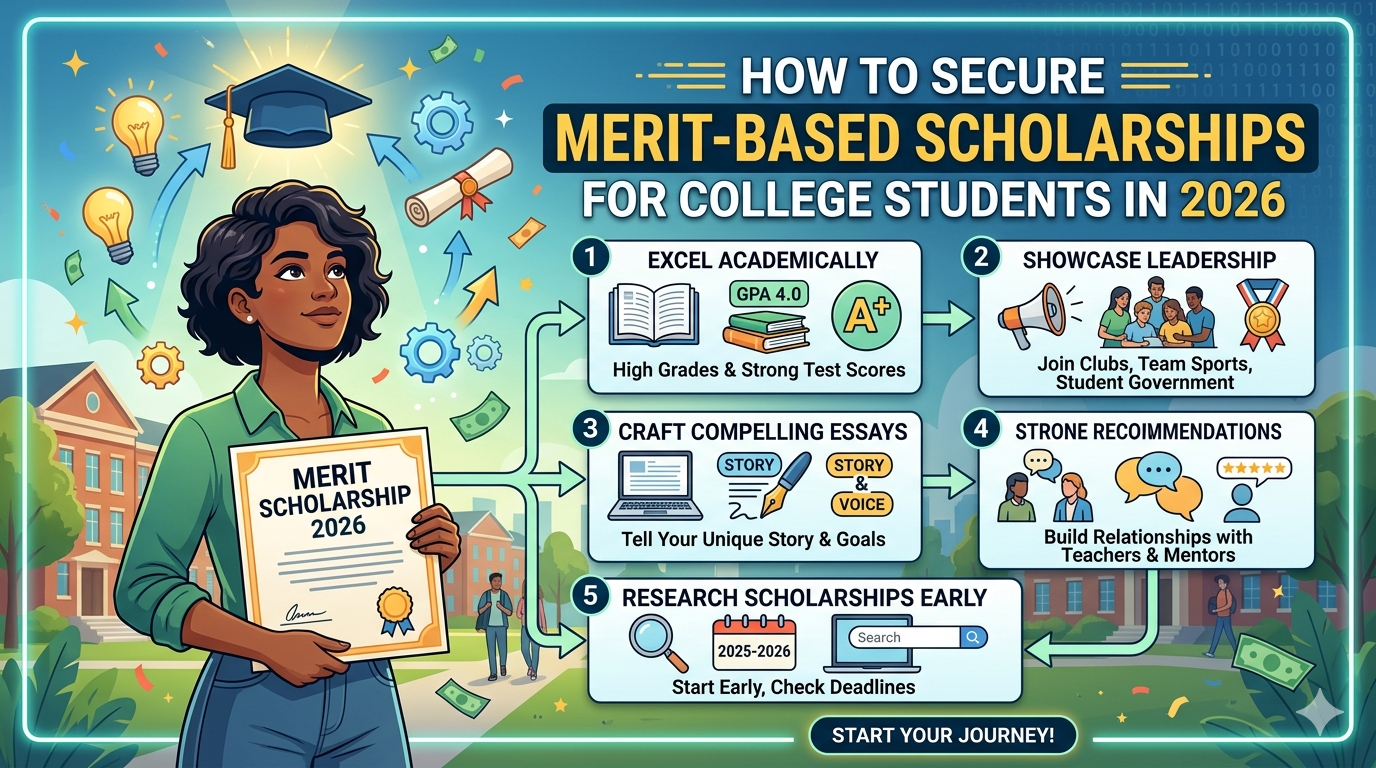

Learn how to secure merit-based scholarships in 2026 with proven strategies, eligibility tips, application guidance, and expert insights to maximize your chances of success.
With the rising cost of higher education, merit-based scholarships have become one of the most valuable opportunities for students aiming to reduce financial burden while pursuing academic excellence. Unlike need-based aid, merit scholarships reward talent, achievement, and dedication—whether in academics, sports, arts, or leadership.
In 2026, the competition for these scholarships is expected to be even more intense due to increasing awareness and global access to applications. This guide will walk you through everything you need to know—from eligibility and preparation to application strategies and insider tips—to help you secure a merit-based scholarship successfully.
What Are Merit-Based Scholarships?
Merit-based scholarships are financial awards given to students based on their performance and achievements rather than financial need. These scholarships can be offered by colleges, universities, private organizations, or government bodies.
They typically consider:
- Academic performance (GPA, board exam scores)
- Standardized test scores
- Extracurricular achievements
- Leadership qualities
- Special talents (sports, arts, innovation)
Types of Merit-Based Scholarships in 2026
Understanding the types of scholarships available helps you target the right opportunities:
1. Academic Scholarships
Awarded based on high grades, rank, or academic excellence.
2. Sports Scholarships
Given to students excelling in athletics at state, national, or international levels.
3. Talent-Based Scholarships
For achievements in music, dance, art, writing, or other creative fields.
4. Leadership Scholarships
Recognize students with strong leadership roles in school or community.
5. STEM and Research Scholarships
Focused on students pursuing science, technology, engineering, or mathematics with innovation or research contributions.
Eligibility Criteria for Merit Scholarships
While each scholarship has its own requirements, common eligibility criteria include:
- Consistently strong academic record
- Participation in extracurricular activities
- Demonstrated leadership or initiative
- Strong recommendation letters
- Personal statement or essay
- Portfolio (for creative fields)
Step-by-Step Guide to Secure Merit-Based Scholarships
1. Start Early
Preparation should begin at least 1–2 years before applying. Build your academic profile, participate in competitions, and engage in meaningful extracurricular activities.
2. Maintain Academic Excellence
Your grades still matter the most. Focus on scoring high in school exams and any standardized tests required for your desired college or scholarship.
3. Build a Strong Profile
Scholarship committees look beyond grades. Make sure your profile includes:
- Leadership roles (club president, team captain)
- Volunteer work
- Internships or projects
- Certifications and achievements
4. Research Scholarships Thoroughly
Create a list of scholarships that match your profile. Look for:
- University-specific scholarships
- Government-funded programs
- Private and NGO scholarships
Keep track of deadlines and requirements.
5. Prepare a Powerful Personal Statement
Your essay can make or break your application. Focus on:
- Your achievements and goals
- Challenges you’ve overcome
- Why you deserve the scholarship
- Your future vision
Make it authentic and compelling.
6. Get Strong Letters of Recommendation
Choose teachers, mentors, or professionals who know you well and can highlight your strengths and achievements.
7. Create an Impressive Portfolio (If Required)
For creative or technical scholarships, showcase your best work:
- Design projects
- Research papers
- Art or music samples
- Coding projects
8. Apply to Multiple Scholarships
Do not rely on just one. Apply to as many relevant scholarships as possible to increase your chances.
9. Prepare for Interviews
Some scholarships require interviews. Practice answering questions about:
- Your goals
- Achievements
- Leadership experience
- Why you chose that field
10. Stay Organized
Use a spreadsheet or planner to track:
- Application deadlines
- Required documents
- Submission status
Top Tips to Increase Your Chances in 2026
- Focus on quality over quantity in achievements
- Highlight unique skills or experiences
- Avoid generic essays—customize each application
- Proofread all documents carefully
- Demonstrate consistency and commitment
- Show impact, not just participation
Common Mistakes to Avoid
- Missing deadlines
- Submitting incomplete applications
- Writing vague or generic essays
- Ignoring eligibility criteria
- Not following instructions properly
Best Platforms to Find Scholarships
You can explore scholarships through:
- Official university websites
- Government scholarship portals
- Educational platforms and NGOs
- School or college counselors
Make sure to verify the authenticity of scholarships before applying.
Importance of Extracurricular Activities
In 2026, scholarships are not just about marks. Activities outside academics play a huge role. These include:
- Volunteering
- Social impact projects
- Sports achievements
- Cultural activities
They reflect your personality, leadership, and commitment.
Role of Technology in Scholarship Applications
Technology is transforming scholarship applications:
- AI-based screening tools
- Online portfolios and digital resumes
- Virtual interviews
- Automated tracking systems
Make sure your digital presence (LinkedIn, portfolio, etc.) is professional and updated.
Scholarships for Indian Students in 2026
Students in India can explore:
- Central and state government scholarships
- Private foundation scholarships
- Corporate-sponsored scholarships
- International university scholarships
Popular options include merit scholarships offered by top Indian institutions and global universities.
Conclusion
Securing a merit-based scholarship in 2026 requires a combination of academic excellence, strategic planning, and strong personal branding. It’s not just about being a top student—it’s about showcasing your overall potential, leadership, and passion.
Start early, stay consistent, and apply smartly. With the right approach and dedication, you can significantly increase your chances of earning a scholarship and achieving your educational goals without financial stress.
FAQs
1. What GPA is required for merit-based scholarships?
Most scholarships require a high GPA, typically above 3.5 or equivalent, but it varies depending on the program.
2. Can I get a merit scholarship without extracurricular activities?
It is possible, but having extracurricular achievements significantly improves your chances.
3. Are merit-based scholarships fully funded?
Some are fully funded, while others cover partial tuition or specific expenses.
4. When should I start applying for scholarships?
Ideally, start researching and preparing at least 1–2 years before your college admission.
5. Do I need to write an essay for all scholarships?
Not all, but most merit-based scholarships require a personal statement or essay.