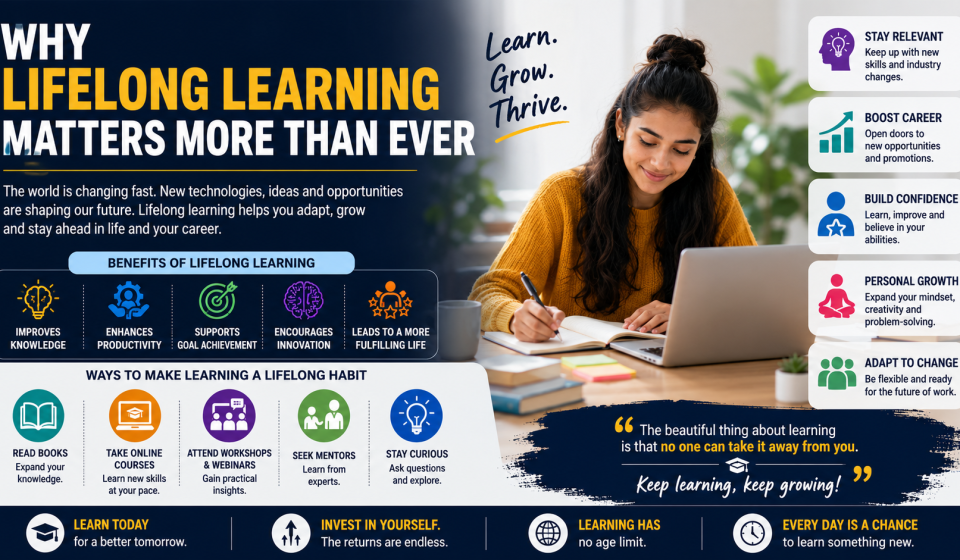

The world is changing faster than ever before. New technologies, career trends, digital tools, and workplace expectations are constantly reshaping how people live and work. In the past, a person could complete formal education, get a job, and depend on the same skills for many years. Today, that approach is no longer enough. To stay successful, confident, and relevant, people must continue learning throughout life.
What Is Lifelong Learning?
Lifelong learning is the habit of learning continuously at every stage of life. It is not limited to classrooms, degrees, or exams. It includes every effort a person makes to improve knowledge, develop skills, solve problems, and understand the world better.
For example, learning a new language, improving communication skills, taking a digital marketing course, understanding artificial intelligence, reading books, or learning financial planning are all forms of lifelong learning.
The main goal of lifelong learning is growth. It helps people remain curious, open-minded, and ready for change.
Technology Is Changing Every Industry
One of the biggest reasons lifelong learning is important today is rapid technological change. Artificial intelligence, automation, data science, robotics, cloud computing, and digital platforms are transforming almost every industry.
Jobs that once required only manual or routine skills now require digital knowledge. Employees are expected to use software, online tools, data systems, and communication platforms. Even traditional fields such as healthcare, education, agriculture, finance, and retail are becoming more technology-focused.
People who continue learning can keep up with these changes. Those who stop learning may find it difficult to compete in modern workplaces.
Lifelong Learning Improves Career Growth
Career success depends on the ability to update skills regularly. Employers prefer people who are adaptable, skilled, and willing to learn. A person who keeps learning becomes more valuable in the workplace.
Lifelong learning can help professionals earn promotions, switch careers, increase income, and take on leadership roles. It also helps people stay confident when job requirements change.
For example, a marketing professional who learns analytics and AI tools can become more effective. A teacher who learns digital education methods can improve student engagement. A business owner who learns online marketing can reach more customers.
It Helps People Stay Competitive
The job market is highly competitive. Many people may have similar degrees, but not everyone has updated skills. Lifelong learners stand out because they show initiative, curiosity, and commitment.
Employers often look for candidates who can solve problems, learn quickly, and adjust to new systems. A person who keeps improving skills is more prepared for interviews, projects, and workplace challenges.
In a fast-changing economy, learning is not just an advantage; it is a necessity.
Lifelong Learning Builds Confidence
Learning new things increases confidence. When people improve their skills, they feel more capable of handling challenges. This confidence helps them take better decisions, speak up at work, apply for better opportunities, and try new things.
Confidence also reduces fear of change. Instead of feeling helpless when new technology or new methods appear, lifelong learners feel prepared to learn and adapt.
This mindset is especially important in today’s world, where change is constant.
It Supports Personal Development
Lifelong learning is not only about career growth. It also improves personal life. Learning helps people become better communicators, better decision-makers, and more thoughtful individuals.
Personal learning can include health awareness, emotional intelligence, financial literacy, parenting skills, time management, creativity, and relationship skills. These areas improve quality of life and help people make smarter choices.
A person who keeps learning becomes more independent, aware, and emotionally strong.
Lifelong Learning Encourages Adaptability
Adaptability is one of the most important skills in the modern world. Industries change, jobs change, and technology changes. People who are adaptable can adjust quickly and find new solutions.
Lifelong learning trains the mind to accept change. It helps people stay flexible instead of feeling stuck. When one skill becomes less useful, lifelong learners can build another.
This adaptability is useful for students, employees, business owners, and even retired people who want to stay active and engaged.
It Helps Students Prepare for the Future
For students, lifelong learning is extremely important. College education provides a foundation, but it may not cover every skill needed in the future job market. Students must learn beyond textbooks.
They can take online courses, build portfolios, complete internships, attend workshops, learn AI tools, improve communication, and develop practical skills. This makes them more employable after graduation.
Students who build lifelong learning habits early become better prepared for career success.
It Encourages Innovation and Creativity
Learning exposes people to new ideas, cultures, tools, and perspectives. This improves creativity and innovation. People who learn continuously are more likely to think differently and solve problems in better ways.
Innovation does not come only from technology experts. It can come from teachers, doctors, designers, writers, entrepreneurs, and students who are willing to learn and experiment.
Lifelong learning keeps the mind active and creative.
Lifelong Learning Improves Problem-Solving Skills
Everyday life and work both require problem-solving. Lifelong learning strengthens the ability to analyze situations, compare options, and make better decisions.
When people learn different subjects, they develop wider thinking. They can connect ideas from different fields and find practical solutions.
For example, a business student who learns psychology can understand customer behavior better. A healthcare worker who learns technology can improve patient care. A designer who learns marketing can create better user-focused content.
Online Learning Makes Education More Accessible
Today, learning is easier than ever because of online platforms. People can access courses, videos, podcasts, eBooks, webinars, and tutorials from anywhere. Many learning resources are free or affordable.
This means people do not always need expensive degrees to improve their skills. They can learn at their own pace and choose topics that match their goals.
Online learning has made lifelong education possible for students, working professionals, parents, and people living in remote areas.
It Helps People Handle Career Changes
Many people change careers during their lifetime. Some do it by choice, while others are forced by industry changes or economic conditions. Lifelong learning makes career transitions easier.
A person who is used to learning can gain new skills faster and move into new roles with less stress. For example, someone from a traditional sales background can learn digital marketing. A writer can learn content strategy and AI tools. An accountant can learn data analytics.
Learning creates more career options.
Lifelong Learning Promotes Mental Growth
Learning keeps the brain active. It improves memory, focus, curiosity, and mental flexibility. People who continue learning often feel more engaged with life.
Reading, solving problems, learning new skills, and exploring new subjects can support mental sharpness. It also gives people a sense of purpose.
This is why lifelong learning is valuable at every age, not only during school or college years.
How to Build a Lifelong Learning Habit
Building a lifelong learning habit does not require huge changes. Start small. Set learning goals, read regularly, take short courses, listen to educational podcasts, attend workshops, and practice new skills.
It is also important to apply what you learn. Knowledge becomes more valuable when used in real life. Students can create projects, professionals can improve work processes, and business owners can test new strategies.
Consistency is more important than speed. Learning a little every day can create big results over time.
Source
https://sl1nk.com/gkupdv7
https://sl1nk.com/ydrqlek
Conclusion
Lifelong learning matters more than ever because the world is changing quickly. Technology, careers, industries, and personal responsibilities are constantly evolving. People who continue learning are better prepared for change, career growth, personal development, and future opportunities.
Lifelong learning helps individuals stay competitive, confident, creative, and adaptable. It is not limited to formal education; it is a mindset that encourages growth throughout life. In a world where skills can become outdated quickly, continuous learning is the key to long-term success.
The future belongs to those who are willing to learn, unlearn, and relearn.
FAQs
1. What does lifelong learning mean?
Lifelong learning means continuously gaining new knowledge and skills throughout life. It includes formal education, online courses, reading, training, workshops, and self-study.
2. Why is lifelong learning important today?
Lifelong learning is important because technology, careers, and industries are changing quickly. It helps people stay updated, competitive, and prepared for future opportunities.
3. How can students practice lifelong learning?
Students can practice lifelong learning by taking online courses, reading books, building projects, learning digital tools, attending workshops, and developing practical skills beyond college subjects.
4. Does lifelong learning help career growth?
Yes, lifelong learning helps career growth by improving skills, increasing confidence, creating better job opportunities, and helping professionals adapt to workplace changes.
5. What are examples of lifelong learning?
Examples include learning a new language, taking a professional course, improving communication skills, learning AI tools, reading educational books, attending seminars, and gaining certifications.