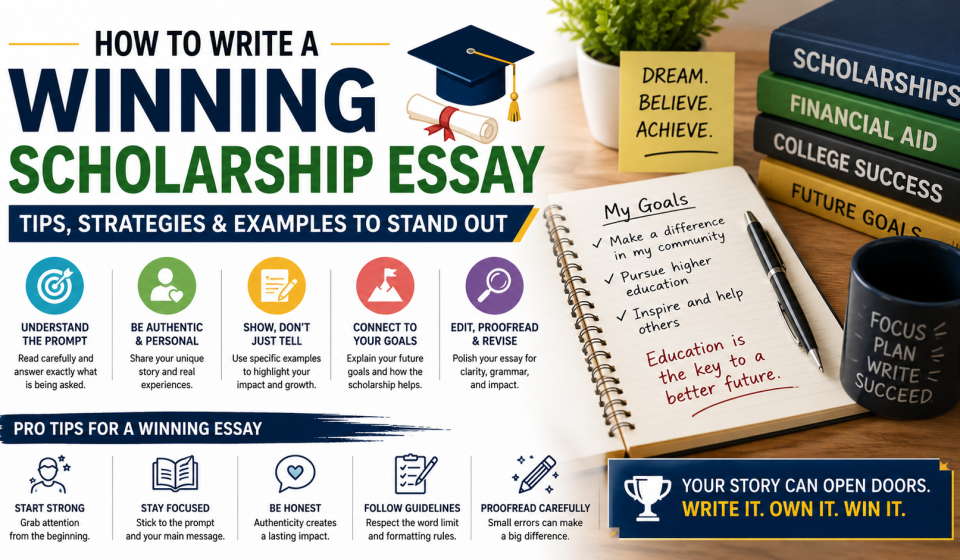

A scholarship essay is one of the most important parts of a scholarship application. While grades, certificates, and achievements show what a student has done, the essay shows who the student is. It gives applicants a chance to share their story, goals, challenges, values, and reasons for deserving financial support. A strong essay can help students stand out from hundreds or even thousands of applicants.
Understand the Scholarship Essay Prompt
Before writing anything, students must carefully read the essay prompt. Many applicants make the mistake of writing a general essay and submitting it to multiple scholarships without answering the specific question. This can reduce their chances of success.
The prompt may ask about career goals, leadership experience, community service, financial need, personal challenges, or academic plans. Students should highlight the main keywords in the prompt and make sure their essay directly answers the question.
A winning essay stays focused from beginning to end. If the scholarship asks about leadership, the essay should not only describe achievements but also explain how the student led others, solved problems, and learned from the experience.
Research the Scholarship Provider
Every scholarship organization has a purpose. Some support academic excellence, while others focus on leadership, community service, diversity, innovation, or financial need. Before writing the essay, students should research the scholarship provider’s mission and values.
Understanding what the organization cares about helps students connect their story to the scholarship’s goals. For example, if the scholarship supports community service, the student should include examples of helping others and explain future plans to continue serving the community.
This does not mean writing what the committee wants to hear without honesty. It means showing how personal goals align with the purpose of the scholarship.
Start with a Strong Introduction
The introduction is the first chance to capture the reader’s attention. A weak opening may make the essay feel ordinary, while a strong opening can make the committee want to continue reading.
Students can begin with a short personal story, a meaningful challenge, an important moment, or a clear statement about their goals. The introduction should be engaging but not too dramatic. It should naturally lead into the main message of the essay.
For example, instead of starting with “I deserve this scholarship because I am hardworking,” a student can begin with a real experience that shows hard work in action. Stories are more powerful than simple claims.
Tell a Personal and Authentic Story
A winning scholarship essay should feel personal. Committees read many essays, so a generic essay can easily be forgotten. Students should share real experiences that shaped their character, goals, or motivation.
Authenticity is important. The essay should sound like the student’s own voice, not like a copied template. Students should avoid exaggerating achievements or using false stories. Honesty creates trust and makes the essay stronger.
A good story usually includes a challenge, action, and result. The student should explain what happened, what they did, what they learned, and how the experience influenced their future.
Show, Do Not Just Tell
Many students write statements such as “I am hardworking,” “I am passionate,” or “I am a leader.” These qualities are good, but they are stronger when shown through examples.
Instead of saying, “I am a leader,” a student can describe how they organized a school project, led a team, helped classmates, or solved a community problem. Specific examples make the essay more believable and memorable.
Scholarship committees want evidence. Real stories, achievements, responsibilities, and lessons learned help prove the student’s qualities.
Connect the Essay to Future Goals
A scholarship essay should explain where the student is going, not only where they have been. Committees want to invest in students who have clear goals and motivation. Students should describe their academic plans, career ambitions, and long-term vision.
The goals do not need to sound perfect or overly ambitious. They should be realistic, meaningful, and connected to the student’s interests. For example, a student who wants to become a teacher can explain how education changed their life and how they want to help future students.
The essay should also explain how the scholarship will support those goals. This helps the committee understand the importance of the award.
Explain Financial Need Clearly
If the scholarship is need-based, students should explain their financial situation respectfully and clearly. They do not need to share every personal detail, but they should help the committee understand why financial support matters.
The focus should be on how the scholarship will reduce barriers and allow the student to continue education. Students can mention tuition costs, books, living expenses, family responsibilities, or limited resources.
However, the essay should not only focus on difficulties. It should also show determination, effort, and hope for the future.
Keep the Essay Organized
A strong scholarship essay should have a clear structure. It should include an introduction, body paragraphs, and conclusion. Each paragraph should focus on one main idea.
The essay should flow naturally. The introduction presents the main message. The body explains experiences, goals, challenges, and achievements. The conclusion summarizes the message and leaves a positive final impression.
Students should avoid jumping between unrelated ideas. A focused essay is easier to read and more powerful.
Use Clear and Simple Language
A winning essay does not need complicated vocabulary. In fact, simple and clear writing is often more effective. The goal is to communicate the message honestly and confidently.
Students should avoid long sentences, unnecessary words, and confusing phrases. The essay should be easy to understand. Strong writing is clear, direct, and personal.
It is also important to avoid slang, spelling mistakes, and grammar errors. A clean essay shows professionalism and effort.
Avoid Common Scholarship Essay Mistakes
Many students lose marks because of avoidable mistakes. Common mistakes include ignoring the prompt, writing a generic essay, using clichés, repeating the resume, exaggerating achievements, submitting without proofreading, and missing the deadline.
Another mistake is focusing too much on problems without showing growth. Challenges can be powerful, but the essay should also explain what the student learned and how they moved forward.
Students should also avoid copying sample essays from the internet. Original writing is always stronger.
Edit and Proofread Carefully
The first draft is rarely perfect. Students should revise their essay several times before submitting it. Editing helps improve clarity, flow, grammar, and impact.
After writing the first draft, students should take a break and read it again later with fresh eyes. They can also ask a teacher, mentor, friend, or family member to review it. Feedback can help identify weak areas.
Proofreading is essential. Even small spelling or grammar mistakes can make the essay look careless.
End with a Strong Conclusion
The conclusion should leave the reader with a clear and positive impression. It should not simply repeat the introduction. Instead, it should remind the committee of the student’s purpose, gratitude, and future goals.
A strong ending shows confidence and hope. Students can explain how the scholarship will help them continue their education and make a meaningful contribution in the future.
The final sentence should feel complete and memorable.
Source
https://l1nq.com/y216i6v
https://sl1nk.com/5mv0g0g
Conclusion
Writing a winning scholarship essay takes time, honesty, and careful planning. Students must understand the prompt, research the scholarship provider, share a personal story, give specific examples, and connect their experiences to future goals. A strong essay is clear, authentic, organized, and focused on growth.
Scholarship committees are not only looking for perfect students. They are looking for motivated students with purpose, potential, and determination. By writing with honesty and confidence, students can create an essay that stands out and increases their chances of earning valuable scholarship support.
FAQs
1. What is a scholarship essay?
A scholarship essay is a written statement submitted with a scholarship application. It explains the student’s background, goals, achievements, challenges, and reasons for applying.
2. How long should a scholarship essay be?
The length depends on the scholarship guidelines. Many essays are between 500 and 1,000 words, but students should always follow the required word limit.
3. How do I start a scholarship essay?
Start with a strong personal story, meaningful experience, or clear statement that connects to the essay prompt.
4. What should I include in a scholarship essay?
Include your personal story, achievements, challenges, goals, financial need if relevant, and how the scholarship will help your future.
5. What should I avoid in a scholarship essay?
Avoid copying templates, ignoring the prompt, using clichés, exaggerating, making grammar mistakes, and submitting a generic essay.