
Technology has completely transformed the way students learn, study, and manage academic responsibilities.
In 2026, study apps and digital learning tools have become essential for improving productivity, organization, focus, and academic performance. From note-taking apps and AI-powered study assistants to focus tools and online collaboration platforms, students now have access to smarter ways of learning than ever before.
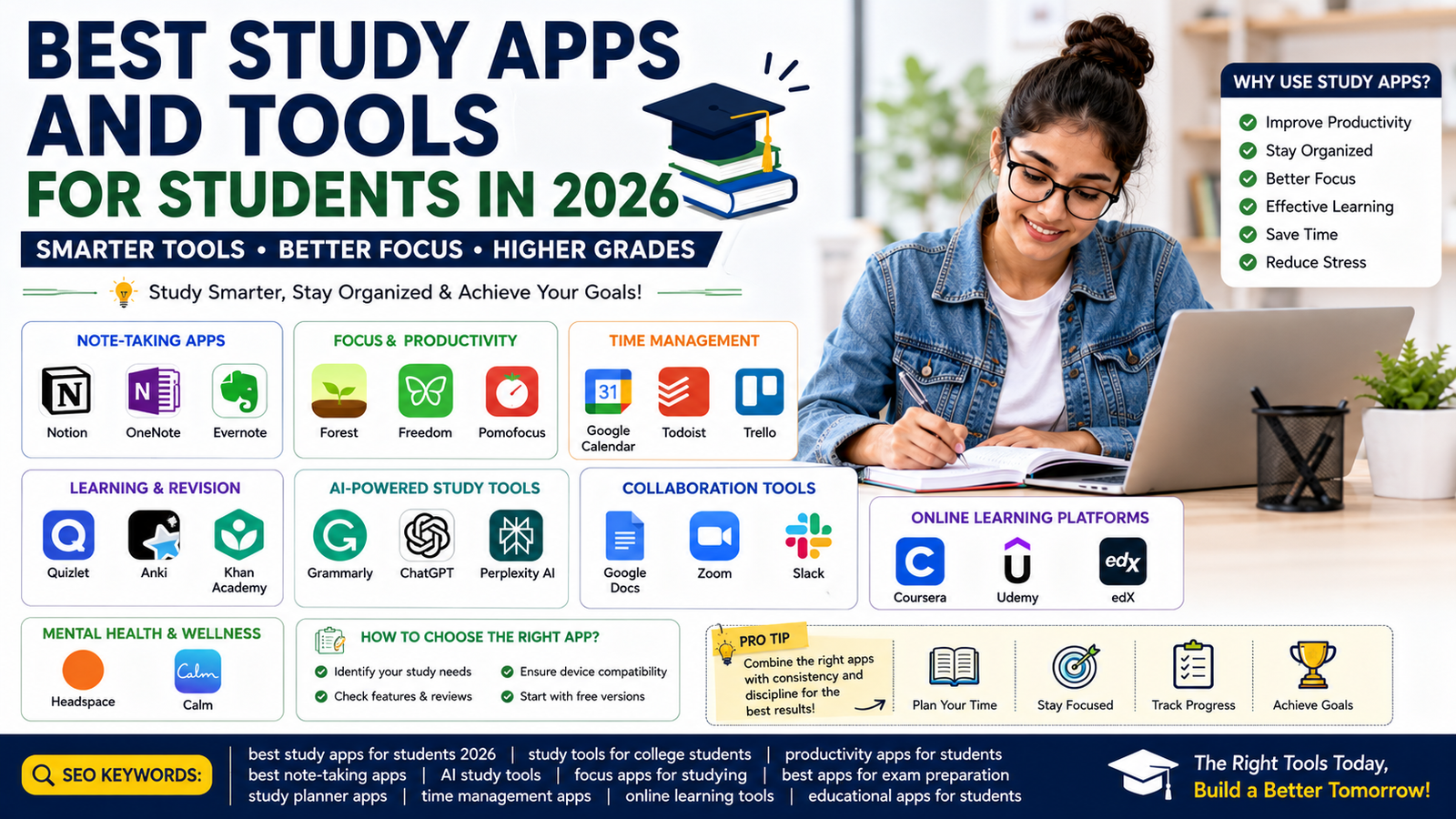
Why Study Apps Are Important for Students
Digital study tools make learning more organized, interactive, and efficient.
Benefits of Study Apps
- Improve productivity
- Enhance focus and concentration
- Simplify note-taking
- Support time management
- Help with revision and memorization
- Reduce academic stress
- Enable collaborative learning
Students who use the right tools can study smarter instead of studying longer.
Best Note-Taking Apps for Students
Good note-taking is essential for academic success.
Notion
Notion remains one of the most popular productivity and study apps in 2026.
Features:
- Note-taking
- Task management
- Study planners
- Collaboration tools
- Custom templates
Students can organize lectures, assignments, and revision schedules in one place.
Microsoft OneNote
OneNote is excellent for students who prefer flexible digital notebooks.
Advantages:
- Handwritten notes
- Audio recording
- Cloud syncing
- Easy organization
It works well for both tablets and laptops.
Evernote
Evernote helps students store and organize important study materials efficiently.
Useful Features:
- Web clipping
- Searchable notes
- Document storage
- Cross-device syncing
Best Apps for Focus and Productivity
Staying focused is one of the biggest challenges for students.
Forest
Forest is a popular focus app that encourages students to avoid phone distractions.
How It Works:
Students plant virtual trees that grow while they stay focused.
Benefits:
- Reduces phone usage
- Improves concentration
- Makes studying more engaging
Freedom
Freedom blocks distracting websites and apps during study sessions.
Key Features:
- Website blocking
- App blocking
- Cross-device support
- Scheduled focus sessions
Pomofocus
Pomofocus uses the Pomodoro Technique to improve concentration and productivity.
Pomodoro Method:
- 25 minutes study
- 5 minutes break
This method helps students avoid burnout.
Best Apps for Time Management
Time management tools help students stay organized and productive.
Google Calendar
Google Calendar helps students manage schedules and deadlines effectively.
Features:
- Class schedules
- Assignment reminders
- Study planning
- Event management
Students can sync calendars across devices.
Todoist
Todoist is a simple yet powerful task management app.
Benefits:
- Daily task lists
- Deadline tracking
- Priority organization
- Productivity monitoring
Trello
Trello uses boards and cards to organize tasks visually.
Best For:
- Group projects
- Assignment planning
- Study schedules
Best Apps for Learning and Revision
Revision tools improve memory retention and exam preparation.
Quizlet
Quizlet is one of the best apps for flashcards and active recall learning.
Features:
- Flashcards
- Practice tests
- Study games
- AI-powered learning tools
Quizlet helps students memorize information faster.
Anki
Anki uses spaced repetition to improve long-term memory.
Best For:
- Medical students
- Language learning
- Competitive exam preparation
Spaced repetition strengthens information retention over time.
Khan Academy
Khan Academy offers free educational lessons across multiple subjects.
Subjects Include:
- Mathematics
- Science
- Economics
- Computer programming
It provides high-quality educational content for students worldwide.
Best AI-Powered Study Tools in 2026
Artificial intelligence is transforming education rapidly.
Grammarly
Grammarly helps students improve writing quality.
Features:
- Grammar correction
- Spell checking
- Clarity suggestions
- AI writing assistance
It is especially useful for essays and assignments.
ChatGPT
AI assistants help students:
- Understand concepts
- Generate study ideas
- Summarize notes
- Practice interview questions
AI tools can improve productivity when used responsibly.
Perplexity AI
Perplexity AI provides research assistance and fast information retrieval for students.
Helpful For:
- Academic research
- Quick explanations
- Source discovery
Best Collaboration Tools for Students
Collaboration tools support teamwork and group learning.
Google Docs
Google Docs allows students to collaborate on assignments in real time.
Advantages:
- Shared editing
- Cloud storage
- Easy commenting
- Automatic saving
Zoom
Zoom remains one of the most widely used virtual learning platforms.
Common Uses:
- Online classes
- Group discussions
- Study sessions
- Tutoring
Slack
Slack improves communication for study groups and academic teams.
Features:
- Group messaging
- File sharing
- Organized channels
Best Apps for Online Learning
Online learning platforms continue growing in popularity.
Coursera
Coursera offers university-level courses from leading institutions.
Popular Topics:
- Technology
- Business
- Data science
- Marketing
Udemy
Udemy provides affordable courses for skill development.
Benefits:
- Flexible learning
- Practical courses
- Career-focused skills
edX
edX partners with top universities to offer professional and academic courses online.
Best Apps for Mental Health and Stress Management
Mental health is essential for academic performance.
Headspace
Headspace helps students reduce stress through meditation and mindfulness exercises.
Calm
Calm offers:
- Sleep stories
- Meditation sessions
- Relaxation music
These tools help students improve focus and emotional well-being.
How to Choose the Right Study Apps
Not every app works for every student.
Factors to Consider
Students should choose apps based on:
- Learning style
- Academic needs
- Budget
- Device compatibility
- Ease of use
Avoid downloading too many apps at once.
Common Mistakes Students Make With Study Apps
Technology can improve learning, but misuse can reduce productivity.
Common Mistakes
- Overusing productivity tools
- Depending completely on AI
- Ignoring offline studying
- Constant app switching
Students should use technology as support, not as a replacement for active learning.
Future of Study Apps in 2026 and Beyond
Educational technology continues evolving rapidly.
Emerging Trends
- AI-powered personalized learning
- Virtual reality classrooms
- Smart tutoring systems
- Adaptive learning platforms
- Voice-controlled study assistants
Future study tools will become more interactive and customized for individual learning styles.
Source
https://sl1nk.com/ofc51ak
https://sl1nk.com/0qq1i97
Conclusion
Study apps and digital learning tools have become essential for academic success in 2026. Whether students need help with focus, organization, note-taking, revision, collaboration, or stress management, there are powerful tools available to support every aspect of learning.
Apps like Notion, Quizlet, Forest, Google Calendar, Grammarly, and Khan Academy help students study smarter, stay organized, and improve productivity. AI-powered tools are also transforming education by making learning more personalized and efficient.
However, students should remember that technology works best when combined with discipline, consistency, and active learning habits. By choosing the right study apps and using them wisely, students can improve academic performance, reduce stress, and achieve long-term educational goals.
FAQs
1. Which is the best study app for college students in 2026?
Popular choices include Notion, Quizlet, Google Calendar, Forest, and Microsoft OneNote.
2.What app helps students stay focused while studying?
Forest, Freedom, and Pomofocus are excellent focus and productivity apps.
3.Which app is best for note-taking?
Notion, OneNote, and Evernote are widely used note-taking apps.
4.Are AI study tools helpful for students?
Yes. AI tools help students understand concepts, improve writing, and organize study materials.
5.What is the best app for revision and memorization?
Quizlet and Anki are highly effective for revision using flashcards and spaced repetition.