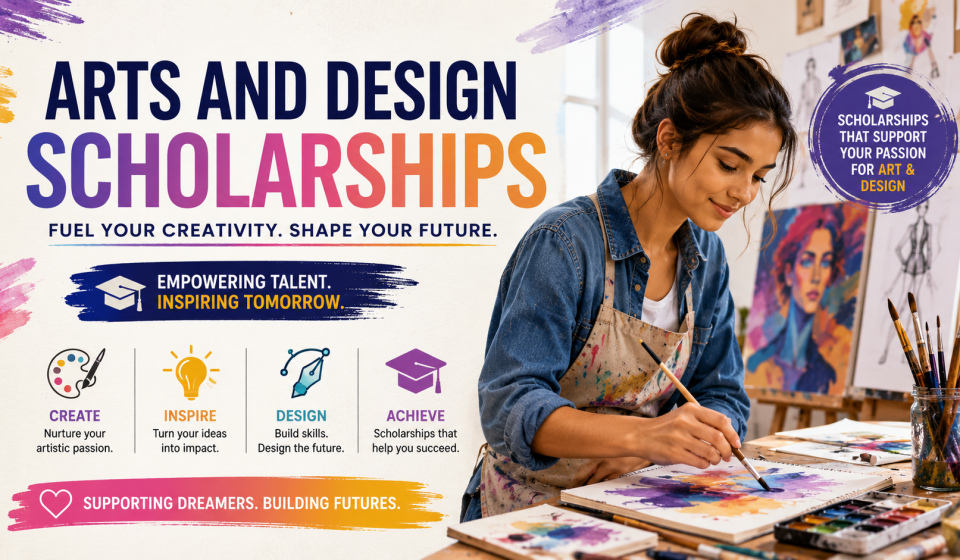

Explore the best arts and design scholarships for students. Learn about eligibility, portfolio requirements, funding options, application tips, and creative career opportunities.
Arts and design fields are full of creativity, imagination, expression, and innovation. Students who dream of becoming artists, graphic designers, fashion designers, interior designers, animators, filmmakers, illustrators, photographers, architects, or digital creators often need professional education to develop their talent. However, studying arts and design can be expensive because students must pay for tuition fees, studio materials, software, equipment, portfolios, exhibitions, and sometimes international study costs. This is where arts and design scholarships become extremely valuable.
Arts and design scholarships help creative students reduce financial pressure and focus on developing their skills. These scholarships may be offered by universities, art schools, design institutes, government programs, private foundations, nonprofit organizations, and creative industry bodies. Some scholarships are based on academic performance, while others focus on creative talent, portfolio quality, financial need, leadership, or community impact.
For students who want to build a career in the creative industry, scholarships can open the door to better education, professional mentorship, networking opportunities, and global exposure. With the right preparation and a strong portfolio, talented students can improve their chances of receiving financial support for their arts and design education.
Why Choose Arts and Design as a Career?
Arts and design are no longer limited to traditional painting or drawing. Today, creative skills are in high demand across many industries. Businesses, media companies, fashion brands, advertising agencies, gaming studios, architecture firms, film studios, publishing houses, and technology companies all need creative professionals.
Students who study arts and design can explore careers in graphic design, animation, UI/UX design, product design, fashion design, interior design, photography, fine arts, illustration, visual communication, game design, film production, and digital media.
A career in arts and design allows students to express ideas visually, solve creative problems, build unique products, and influence culture. It is a strong field for students who enjoy creativity, storytelling, technology, and innovation.
What Are Arts and Design Scholarships?
Arts and design scholarships are financial awards given to students pursuing creative education. These scholarships help cover tuition fees, living expenses, art supplies, design software, project costs, travel, or portfolio development.
Unlike many traditional scholarships, arts and design scholarships often focus on creativity and portfolio strength. A student’s artwork, design projects, sketches, photography, videos, or digital creations may be more important than grades alone.
Some scholarships are fully funded, while others provide partial financial support. Students should carefully check what each scholarship covers before applying.
Types of Arts and Design Scholarships
There are many types of scholarships available for creative students. These include merit-based scholarships, need-based scholarships, portfolio-based scholarships, university scholarships, government scholarships, minority scholarships, women in design scholarships, and course-specific scholarships.
Each scholarship has different requirements. Some may ask for academic records, while others may require a creative portfolio, artist statement, essay, or interview.
University and Art School Scholarships
Many universities and art schools offer scholarships for students enrolling in arts and design programs. These scholarships may be available for undergraduate, postgraduate, diploma, or certificate courses.
Institutions offering art and design programs often provide scholarships based on talent, academic achievement, leadership, or financial need. Students applying to schools of fine arts, design colleges, fashion institutes, film schools, or architecture programs should check the official scholarship pages of their chosen institutions.
Some scholarships are automatically considered during admission, while others require a separate application.
Portfolio-Based Scholarships
Portfolio-based scholarships are very common in arts and design education. A portfolio is a collection of a student’s best creative work. It shows skills, imagination, originality, technique, and growth.
A strong portfolio may include drawings, paintings, digital designs, photography, animation, fashion sketches, product designs, 3D models, videos, or design projects. The exact portfolio format depends on the course and scholarship.
Students should choose quality over quantity. A small portfolio with strong, original work is better than a large portfolio with weak or unfinished projects.
Merit-Based Scholarships
Merit-based arts and design scholarships are awarded to students with excellent academic records and strong creative achievements. These scholarships may consider grades, awards, competitions, exhibitions, creative projects, leadership activities, and portfolio quality.
Students who have participated in art competitions, design challenges, exhibitions, or creative community projects may have an advantage.
Merit-based scholarships are ideal for students who can show both academic dedication and creative excellence.
Need-Based Scholarships
Need-based scholarships support students who require financial assistance. These scholarships consider family income, financial background, personal circumstances, and the student’s ability to pay for education.
Creative education can be costly because of art materials, studio fees, digital tools, printing, equipment, and project expenses. Need-based scholarships help talented students continue their education without heavy financial stress.
Students applying for need-based scholarships may need to submit financial documents, income proof, or a personal statement explaining their financial situation.
Course-Specific Arts and Design Scholarships
Some scholarships are available for specific creative fields. Students may find scholarships for fine arts, graphic design, fashion design, interior design, animation, film studies, photography, architecture, visual communication, product design, industrial design, textile design, and digital media.
Course-specific scholarships are useful because they focus on a particular area of talent. For example, a fashion design student may apply for fashion scholarships, while an animation student may apply for digital media or film-related scholarships.
Scholarships for Fine Arts Students
Fine arts scholarships support students who study painting, sculpture, drawing, printmaking, ceramics, installation art, or mixed media. These scholarships often require a portfolio, artist statement, and examples of original work.
Fine arts students should highlight creativity, concept development, technique, and personal style. Scholarship committees often look for students who have a clear artistic voice and dedication to their practice.
Scholarships for Graphic Design Students
Graphic design scholarships are popular because graphic design is widely used in branding, advertising, digital marketing, publishing, and web design. Students applying for graphic design scholarships should include logo designs, posters, typography work, packaging designs, social media creatives, UI layouts, and visual identity projects in their portfolio.
A strong graphic design portfolio should show creativity, communication skills, layout understanding, and professional presentation.
Scholarships for Fashion Design Students
Fashion design scholarships support students interested in clothing design, textile design, styling, fashion illustration, pattern making, and sustainable fashion. These scholarships may require fashion sketches, garment samples, mood boards, sewing work, or design concepts.
Students interested in fashion scholarships should show originality, trend awareness, craftsmanship, and understanding of fabric, color, and form.
Scholarships for Animation and Digital Media Students
Animation and digital media scholarships are ideal for students interested in 2D animation, 3D animation, game design, motion graphics, visual effects, digital storytelling, and interactive media.
Applicants may need to submit animation reels, storyboards, character designs, digital illustrations, short films, or game concepts. Since animation and digital media are closely connected to technology, students should also show software skills and creative storytelling ability.
Scholarships for Interior Design Students
Interior design scholarships support students who want to design functional and beautiful indoor spaces. These scholarships may require sketches, space planning projects, mood boards, 3D models, furniture layouts, or design concepts.
Interior design students should show creativity, technical understanding, attention to detail, and awareness of materials, lighting, color, and user experience.
Scholarships for Photography and Film Students
Photography and film scholarships support students who want to build careers in visual storytelling. Photography applicants may submit portraits, landscapes, documentary photography, fashion photography, or creative photo series.
Film students may need to submit short films, scripts, storyboards, video projects, or production work. Scholarship committees often look for originality, storytelling, technical quality, and emotional impact.
Eligibility Criteria for Arts and Design Scholarships
Eligibility criteria depend on the scholarship provider. However, most arts and design scholarships require students to be enrolled in or applying for a creative course. Students may also need academic transcripts, proof of financial need, portfolio, personal statement, recommendation letters, and sometimes an interview.
Some scholarships are open to undergraduate students, while others are for postgraduate or research students. Some may be limited to specific countries, institutions, age groups, or creative fields.
Students should read eligibility guidelines carefully before applying.
Documents Required for Arts and Design Scholarships
Common documents required for arts and design scholarships include academic transcripts, admission offer letter, passport or ID, creative portfolio, artist statement, personal essay, letters of recommendation, CV or resume, financial documents, and proof of achievements.
The portfolio is usually the most important document. It should be well-organized, visually clean, and easy to understand. Students should include titles, short descriptions, materials used, software used, and project purpose where needed.
How to Build a Strong Creative Portfolio
A strong portfolio should show the student’s best work, personal style, and creative growth. Students should avoid including every project they have ever made. Instead, they should select work that represents skill, originality, and potential.
The portfolio should include a variety of work but still feel organized. For example, a graphic design portfolio may include branding, typography, poster design, packaging, and digital design. A fine arts portfolio may include drawings, paintings, sketches, and concept-based pieces.
Presentation matters. Clear images, proper labeling, and neat layout can make the portfolio more professional.
How to Apply for Arts and Design Scholarships
The first step is to choose your course and institution. Then search for scholarships available at universities, art schools, design institutes, government portals, and creative organizations.
Students should carefully read application deadlines, eligibility rules, portfolio requirements, essay prompts, and document instructions. Some scholarships require online submission, while others may ask for interviews or portfolio reviews.
Students should apply early because preparing a strong portfolio and personal statement takes time.
Tips to Improve Scholarship Chances
To improve scholarship chances, students should focus on quality, originality, and clarity. A scholarship application should show passion for the creative field and a clear future goal.
Students should write a strong personal statement explaining why they chose arts and design, what inspires their work, and how the scholarship will help them grow. They should also ask for recommendation letters from teachers, mentors, or creative professionals who understand their talent.
Participating in exhibitions, competitions, internships, workshops, and creative projects can also strengthen the application.
Common Mistakes to Avoid
Many students make the mistake of submitting a weak or unorganized portfolio. Poor image quality, unclear project descriptions, copied ideas, and unfinished work can reduce scholarship chances.
Another mistake is ignoring instructions. If a scholarship asks for 10 portfolio pieces, students should not submit 30. If the file size or format is mentioned, it should be followed exactly.
Students should also avoid writing generic essays. A strong essay should feel personal, honest, and connected to the scholarship’s purpose.
Benefits of Arts and Design Scholarships
Arts and design scholarships provide financial support, but they also offer many other benefits. Winning a scholarship can improve a student’s confidence and professional profile. It shows that the student’s talent has been recognized.
Scholarships can also provide access to mentorship, exhibitions, workshops, internships, industry networks, and creative communities. These opportunities can help students build a successful career in the arts and design industry.
Source
https://sl1nk.com/ahn2zvc
https://l1nq.com/gwz58d0
Conclusion
Arts and design scholarships are valuable opportunities for creative students who want to turn their talent into a professional career. Whether a student is interested in fine arts, graphic design, fashion, animation, photography, film, interior design, or digital media, scholarships can make education more affordable and accessible.
The key to success is early preparation, a strong portfolio, clear goals, and a complete application. Students should research official scholarship sources, follow guidelines carefully, and present their creativity with confidence. With the right approach, arts and design scholarships can help students study at respected institutions, develop professional skills, and build a successful creative future.
FAQs
1. What are arts and design scholarships?
Arts and design scholarships are financial awards given to students pursuing creative fields such as fine arts, graphic design, fashion design, animation, photography, film, interior design, and digital media.
2. Do arts and design scholarships require a portfolio?
Yes, many arts and design scholarships require a creative portfolio. The portfolio shows the student’s skills, originality, style, and creative potential.
3. Can international students apply for arts and design scholarships?
Yes, many universities, art schools, and organizations offer arts and design scholarships for international students.
4. Are arts and design scholarships fully funded?
Some scholarships are fully funded, but many provide partial funding or tuition fee discounts. Students should check what each scholarship covers.
5. What should I include in an arts and design portfolio?
A portfolio should include your best creative work, project descriptions, sketches, finished pieces, digital work, photography, videos, or design concepts depending on your field.