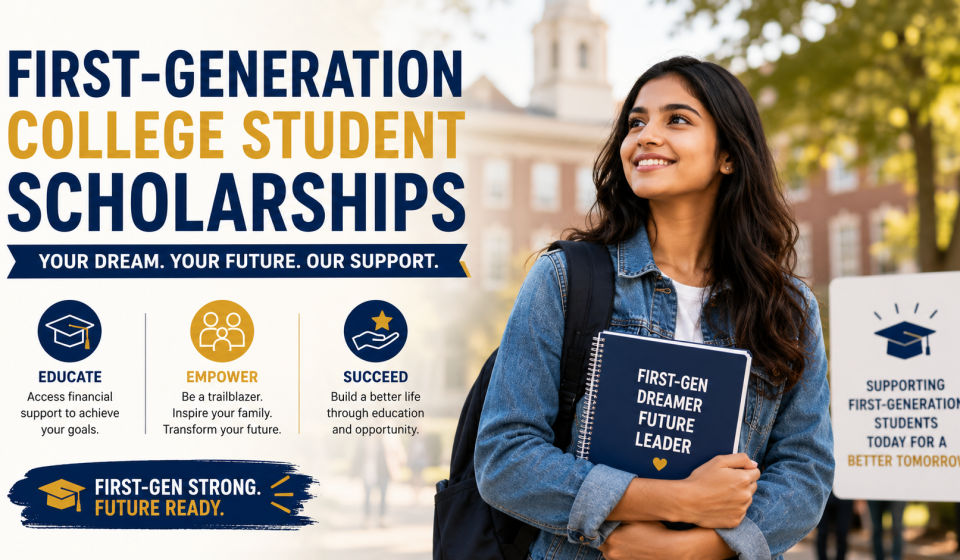

Discover first-generation college student scholarships, eligibility requirements, application tips, financial aid options, and funding opportunities to support your higher education journey.
First-generation college students are students whose parents or guardians did not complete a four-year college degree. For many of these students, entering college is a powerful achievement, but the journey can also be challenging. They may face financial pressure, limited guidance, confusion about admissions, and uncertainty about scholarship applications. This is why first-generation college student scholarships are so important.
These scholarships are designed to support students who are the first in their families to attend college. They help reduce tuition costs, living expenses, books, transportation, and other education-related costs. More importantly, they recognize the courage, determination, and hard work of students who are creating a new educational path for themselves and their families.
First-generation students often bring strong motivation, resilience, and unique life experiences to college campuses. Scholarships give them the opportunity to focus more on learning, skill development, networking, and career growth instead of worrying only about financial stress.
What Are First-Generation College Student Scholarships?
First-generation college student scholarships are financial awards created specifically for students who are the first in their family to pursue higher education. These scholarships may be offered by universities, colleges, nonprofit organizations, private foundations, community groups, government programs, and scholarship platforms.
Some scholarships are based mainly on first-generation status, while others also consider academic performance, financial need, leadership, community service, personal background, or career goals. Some awards are fully funded, while others provide partial support.
These scholarships can be available for undergraduate students, transfer students, community college students, and sometimes graduate students. The main goal is to help students overcome financial barriers and successfully complete their education.
Why First-Generation Scholarships Matter
First-generation students often face challenges that other students may not fully understand. Since their families may not have direct college experience, they might not know how to apply for financial aid, choose courses, talk to advisors, or prepare for internships.
Scholarships provide financial support, but they also send an important message: first-generation students belong in college. This confidence can encourage students to continue their education and complete their degrees.
Many first-generation scholarships also connect students with mentoring, academic advising, leadership programs, and networking opportunities. These extra supports can make a big difference in college success.
Financial Challenges Faced by First-Generation Students
College can be expensive. Tuition fees, textbooks, housing, meals, transportation, technology, and personal expenses can create serious financial pressure. Many first-generation students come from families with limited financial resources, making scholarships even more valuable.
Some students may also need to work part-time while studying. Balancing work, classes, assignments, and personal responsibilities can be difficult. Scholarships can reduce the need for excessive work hours and allow students to focus more on academics.
Financial support can also help students participate in internships, campus activities, research projects, and leadership programs.
Types of First-Generation College Scholarships
There are several types of scholarships available for first-generation students. These include merit-based scholarships, need-based scholarships, university scholarships, community scholarships, minority scholarships, career-specific scholarships, and transfer student scholarships.
Each scholarship has different eligibility requirements. Some may require proof of first-generation status, while others may ask for essays, recommendation letters, academic records, or financial documents.
Students should apply to multiple scholarships to increase their chances of receiving support.
University-Based First-Generation Scholarships
Many colleges and universities offer scholarships for first-generation students. These scholarships may be provided through admissions offices, financial aid offices, student success centers, or special first-generation programs.
Some universities automatically consider first-generation students for scholarships during admission, while others require a separate application. Students should check the official financial aid page of their chosen college.
University-based scholarships may also include mentoring programs, academic workshops, and first-generation student communities.
Need-Based Scholarships
Need-based scholarships are very common for first-generation students. These scholarships are awarded to students who show financial need. Applicants may need to submit financial aid forms, income details, or documents showing their family’s financial situation.
Need-based scholarships help students who may not be able to afford college without support. They can cover tuition, books, housing, transportation, or other study costs.
Students should apply for financial aid as early as possible because some need-based funds are limited.
Merit-Based Scholarships
Merit-based scholarships are awarded to students with strong academic performance, leadership skills, community service, or special achievements. First-generation students with good grades, awards, extracurricular activities, and volunteer experience may qualify for these scholarships.
A student does not always need perfect grades to win a merit scholarship. Many scholarship committees look for determination, improvement, leadership, and personal growth.
Students should highlight their achievements clearly in their application.
Community and Nonprofit Scholarships
Many community foundations, charities, and nonprofit organizations offer scholarships for first-generation students. These scholarships may focus on students from specific cities, states, schools, backgrounds, or income levels.
Community scholarships can sometimes be less competitive than national scholarships because they are limited to a smaller group of applicants. Students should check local organizations, libraries, high school counseling offices, community centers, and nonprofit websites.
Minority and Underserved Student Scholarships
Some first-generation students may also qualify for scholarships designed for minority, low-income, rural, immigrant, or underserved students. These scholarships aim to increase access to education for students who may face additional barriers.
Students should search for scholarships that match their personal background, academic goals, location, or career interests. Combining first-generation status with other eligibility factors can increase scholarship opportunities.
Career-Specific Scholarships
Career-specific scholarships are available for students pursuing certain fields of study. First-generation students may find scholarships for healthcare, education, engineering, business, social work, law, technology, public service, agriculture, and science.
These scholarships are useful because they support students who have clear career goals. For example, a first-generation student planning to become a teacher may apply for education scholarships, while a student interested in nursing may apply for healthcare scholarships.
Transfer Student Scholarships
Many first-generation students begin their education at community colleges and later transfer to four-year universities. Transfer student scholarships help these students continue their education without facing heavy financial pressure.
Some universities offer special scholarships for community college transfer students. Students should check transfer admissions pages and financial aid offices for available opportunities.
A strong transfer application should include good grades, a clear academic plan, and proof of involvement in college or community activities.
Eligibility Criteria for First-Generation Scholarships
Eligibility criteria depend on the scholarship provider. The most common requirement is that the student must be first-generation, meaning neither parent or guardian has completed a bachelor’s degree. However, definitions may vary, so students should read the rules carefully.
Other common requirements include academic transcripts, financial need, enrollment in an accredited college, minimum GPA, leadership experience, community service, personal essay, and recommendation letters.
Some scholarships may also require students to be U.S. citizens, permanent residents, international students, or residents of a specific region, depending on the provider.
Documents Required for Application
Students applying for first-generation scholarships should prepare documents early. Common requirements include academic transcripts, proof of admission, financial aid information, personal statement, scholarship essay, recommendation letters, resume, and proof of first-generation status if requested.
A personal statement is very important. It should explain the student’s background, challenges, goals, and motivation for attending college. Students should be honest and specific rather than writing a generic essay.
Recommendation letters should come from teachers, counselors, mentors, employers, or community leaders who know the student well.
How to Write a Strong Scholarship Essay
A strong scholarship essay can make a first-generation student stand out. The essay should tell a personal story and explain why college matters to the student.
Students can write about their family background, educational journey, challenges they have overcome, leadership experiences, community service, and career goals. The essay should show determination, responsibility, and hope for the future.
It is important to connect the scholarship with the student’s goals. Students should explain how the financial support will help them succeed in college and contribute to their community.
How to Find First-Generation Scholarships
Students can find scholarships through college financial aid offices, university websites, scholarship search platforms, high school counselors, community foundations, nonprofit organizations, and government education websites.
Students should start searching early, preferably before senior year of high school or before transferring to a university. Scholarship deadlines vary, so keeping a calendar is helpful.
It is also useful to create a scholarship folder with documents, essays, transcripts, and recommendation letters. This makes applying to multiple scholarships easier.
Tips to Increase Scholarship Chances
First-generation students can improve their chances by applying to many scholarships, starting early, writing personalized essays, and submitting complete applications.
Students should carefully follow instructions. If a scholarship asks for a 500-word essay, students should stay close to that limit. If recommendation letters are required, they should request them early.
Students should also proofread applications before submitting. Grammar mistakes, missing documents, or unclear answers can reduce the chances of selection.
Common Mistakes to Avoid
One common mistake is waiting until the last minute. Scholarship applications take time, especially when essays and recommendation letters are required.
Another mistake is using the same essay for every scholarship without making changes. Each scholarship has different goals, so students should customize their essays.
Students should also avoid ignoring small scholarships. Smaller awards can add up and cover books, fees, transportation, or supplies.
Benefits of First-Generation Scholarships
First-generation scholarships provide more than financial support. They give students confidence, recognition, and motivation. Winning a scholarship can remind students that their hard work matters.
Scholarships can also connect students with mentors, academic programs, leadership training, and professional networks. These resources can help students adjust to college life and prepare for careers.
For many families, a first-generation scholarship represents hope and progress. It can inspire younger siblings and future generations to pursue higher education.
Source
https://sl1nk.com/580inf0
https://sl1nk.com/d5e36px
Conclusion
First-generation college student scholarships are valuable opportunities for students who are creating a new educational path in their families. These scholarships help reduce financial barriers and support students as they pursue degrees, careers, and personal growth.
The key to success is early preparation, careful research, strong essays, complete documents, and consistent effort. First-generation students should be proud of their journey and apply for as many relevant scholarships as possible. With determination and the right support, they can achieve college success and build a better future for themselves and their families.
FAQs
1. What is a first-generation college student?
A first-generation college student is usually a student whose parents or guardians did not complete a four-year college degree. However, definitions may vary by scholarship provider.
2. Are there scholarships only for first-generation students?
Yes, many colleges, foundations, and organizations offer scholarships specifically for first-generation college students.
3. Do first-generation scholarships require financial need?
Some scholarships require financial need, while others focus on academic merit, leadership, personal background, or community service.
4. Can first-generation students apply for merit scholarships?
Yes, first-generation students can apply for merit scholarships if they meet academic or achievement-based requirements.
5. What documents are needed for first-generation scholarships?
Common documents include transcripts, personal essays, recommendation letters, admission proof, financial aid forms, and sometimes proof of first-generation status.