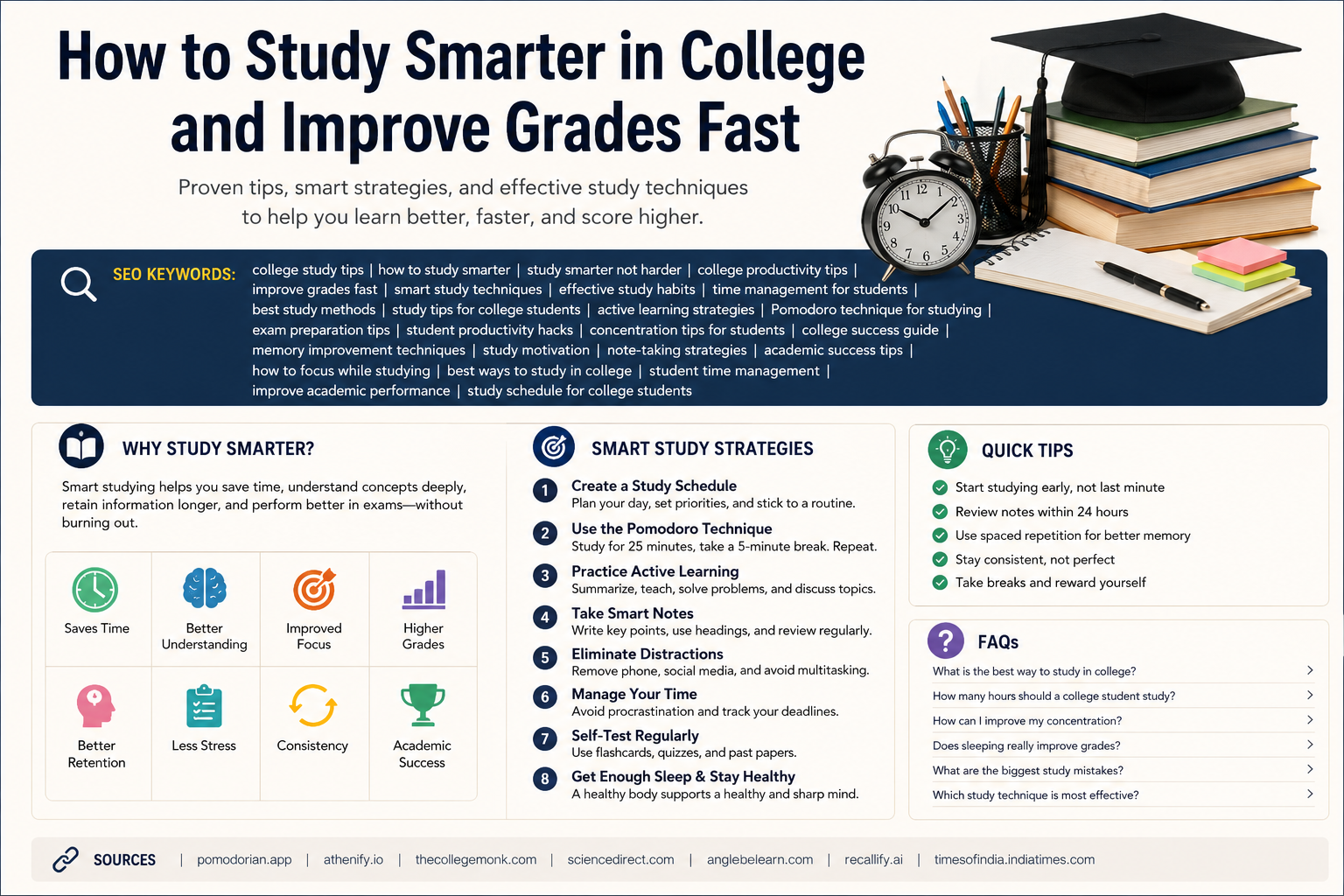

College life can be exciting, challenging, and sometimes overwhelming. Between assignments, lectures, projects, part-time jobs, and social life, many students struggle to keep up academically.
Why Smart Studying Matters in College
Many college students make the mistake of relying on last-minute cramming sessions. While this may work temporarily, it often leads to stress, poor memory retention, and lower grades.
Smart studying focuses on:
- Better time management
- Active learning techniques
- Improved concentration
- Efficient revision methods
- Long-term understanding
Instead of spending 10 unproductive hours studying, smart learners maximize results in fewer focused sessions.
Create a Study Schedule That Actually Works
One of the biggest reasons students fall behind is poor planning. A structured study schedule can help you stay consistent and avoid unnecessary stress.
Tips for Creating an Effective Study Schedule:
- Use a planner or digital calendar
- Break large tasks into smaller goals
- Study at the same time daily
- Prioritize difficult subjects first
- Include short breaks between sessions
A well-organized schedule keeps you disciplined and prevents procrastination.
Use the Pomodoro Technique for Better Focus
The Pomodoro Technique is one of the most effective productivity methods for students.
How It Works:
- Study for 25 minutes
- Take a 5-minute break
- Repeat four times
- Take a longer 15–30 minute break
This method improves concentration and prevents mental fatigue. Short study bursts help the brain stay active and engaged.
Focus on Active Learning Instead of Passive Reading
Reading textbooks repeatedly is not always effective. Smart students use active learning methods to improve understanding and memory retention.
Examples of Active Learning:
- Summarizing concepts in your own words
- Teaching topics to someone else
- Creating flashcards
- Solving practice questions
- Participating in group discussions
Active learning forces your brain to process information deeply, making it easier to remember during exams.
Take Better Notes During Lectures
Good notes can save hours of revision time before exams.
Effective Note-Taking Tips:
- Write key concepts instead of every sentence
- Highlight important formulas and definitions
- Use bullet points and headings
- Review notes within 24 hours
- Try digital note-taking apps if helpful
Organized notes improve revision efficiency and help you understand topics faster.
Eliminate Distractions While Studying
Distractions are one of the biggest productivity killers for college students.
Common Study Distractions:
- Social media notifications
- Mobile phones
- Noisy environments
- Multitasking
- Unorganized study space
How to Stay Focused:
- Put your phone on silent
- Use website blockers
- Study in a quiet environment
- Keep your desk clean
- Listen to instrumental music if it helps concentration
Even a few distractions can significantly reduce learning efficiency.
Learn How to Manage Your Time Effectively
Time management is essential for academic success.
Students who manage time properly can:
- Complete assignments early
- Reduce stress
- Maintain better grades
- Balance personal and academic life
Time Management Strategies:
- Set daily priorities
- Avoid procrastination
- Use productivity apps
- Start assignments early
- Track deadlines carefully
Small improvements in time management can lead to major academic improvements.
Practice Retrieval and Self-Testing
One of the best ways to improve memory is through retrieval practice.
Instead of simply rereading material, test yourself regularly.
Effective Self-Testing Methods:
- Solve previous exam papers
- Use flashcards
- Take online quizzes
- Write practice answers without notes
Self-testing strengthens memory and helps identify weak areas before exams.
Improve Your Memory With Spaced Repetition
Spaced repetition is a scientifically proven learning method.
Instead of cramming everything in one day, review information over increasing intervals.
Example:
- Review after 1 day
- Then after 3 days
- Then after 1 week
- Then after 1 month
This technique helps transfer knowledge into long-term memory.
Get Enough Sleep and Maintain a Healthy Lifestyle
Many students sacrifice sleep during exams, but lack of sleep negatively affects concentration, memory, and learning ability.
Healthy Habits for Better Academic Performance:
- Sleep 7–8 hours daily
- Drink enough water
- Exercise regularly
- Eat nutritious meals
- Avoid excessive caffeine
A healthy body supports a healthy mind.
Use Technology to Study Smarter
Modern technology can make studying more efficient.
Useful Tools for Students:
- Note-taking apps
- Flashcard apps
- Productivity timers
- Online learning platforms
- Cloud storage for notes
Using the right digital tools can save time and improve organization.
Develop a Positive Study Mindset
Your mindset plays a major role in academic success.
Students who believe they can improve are more likely to stay motivated and overcome challenges.
Ways to Stay Motivated:
- Set realistic goals
- Reward yourself after studying
- Track progress
- Avoid comparing yourself to others
- Focus on continuous improvement
Confidence and consistency are key to long-term success.
Study in a Way That Matches Your Learning Style
Every student learns differently. Understanding your learning style can improve study efficiency.
Common Learning Styles:
- Visual learners prefer diagrams and videos
- Auditory learners prefer lectures and discussions
- Reading/writing learners prefer notes and textbooks
- Kinesthetic learners learn through practice
Experiment with different methods to discover what works best for you.
Source
https://sl1nk.com/1a83swv
https://l1nq.com/sri99ih
Conclusion
Studying smarter in college is not about spending every hour buried in textbooks. It’s about using effective strategies that improve focus, memory, productivity, and understanding.
By creating a structured study schedule, practicing active learning, avoiding distractions, managing time wisely, and maintaining healthy habits, students can improve grades faster and reduce academic stress.
Success in college comes from consistency, discipline, and smart study techniques. Start applying these methods today, and you’ll notice significant improvements in both your confidence and academic performance.
FAQs
1. What is the best way to study in college?
The best way to study is by using active learning techniques such as self-testing, note summarization, flashcards, and spaced repetition instead of passive reading.
2. How many hours should a college student study daily?
Most students benefit from 2–4 hours of focused study daily outside class, depending on workload and course difficulty.
3. How can I improve my concentration while studying?
You can improve concentration by eliminating distractions, using the Pomodoro Technique, studying in a quiet place, and taking regular breaks.
4. Is studying at night better than studying in the morning?
It depends on personal preference. Some students focus better in the morning, while others are more productive at night.
5. Does sleeping help improve grades?
Yes. Proper sleep improves memory, focus, and learning ability, which directly impacts academic performance.