
Discover smart study strategies every college student should follow to boost productivity, improve focus, and achieve academic success with proven techniques and practical tips.
College life is exciting, but it also comes with academic pressure, deadlines, and competition. Many students struggle not because they lack intelligence, but because they don’t follow effective study strategies. Studying smarter—not harder—is the key to success in college. With the right techniques, you can improve retention, manage time efficiently, and reduce stress.
This article explores practical and smart study strategies that every college student should adopt to maximize performance and achieve consistent academic success.
1. Set Clear Academic Goals
Success begins with clarity. Without clear goals, studying becomes directionless. Define what you want to achieve in each subject—whether it’s scoring above a certain percentage, mastering a topic, or improving weak areas.
Break your goals into:
- Short-term goals (weekly or monthly targets)
- Long-term goals (semester or yearly objectives)
Clear goals help you stay motivated and measure your progress effectively.
2. Create a Structured Study Plan
A well-organized study schedule is essential. Instead of studying randomly, allocate specific time slots for each subject.
Tips for creating a study plan:
- Prioritize difficult subjects first
- Use a planner or digital calendar
- Include breaks to avoid burnout
- Stick to a consistent routine
A structured plan ensures that you cover all subjects without last-minute stress.
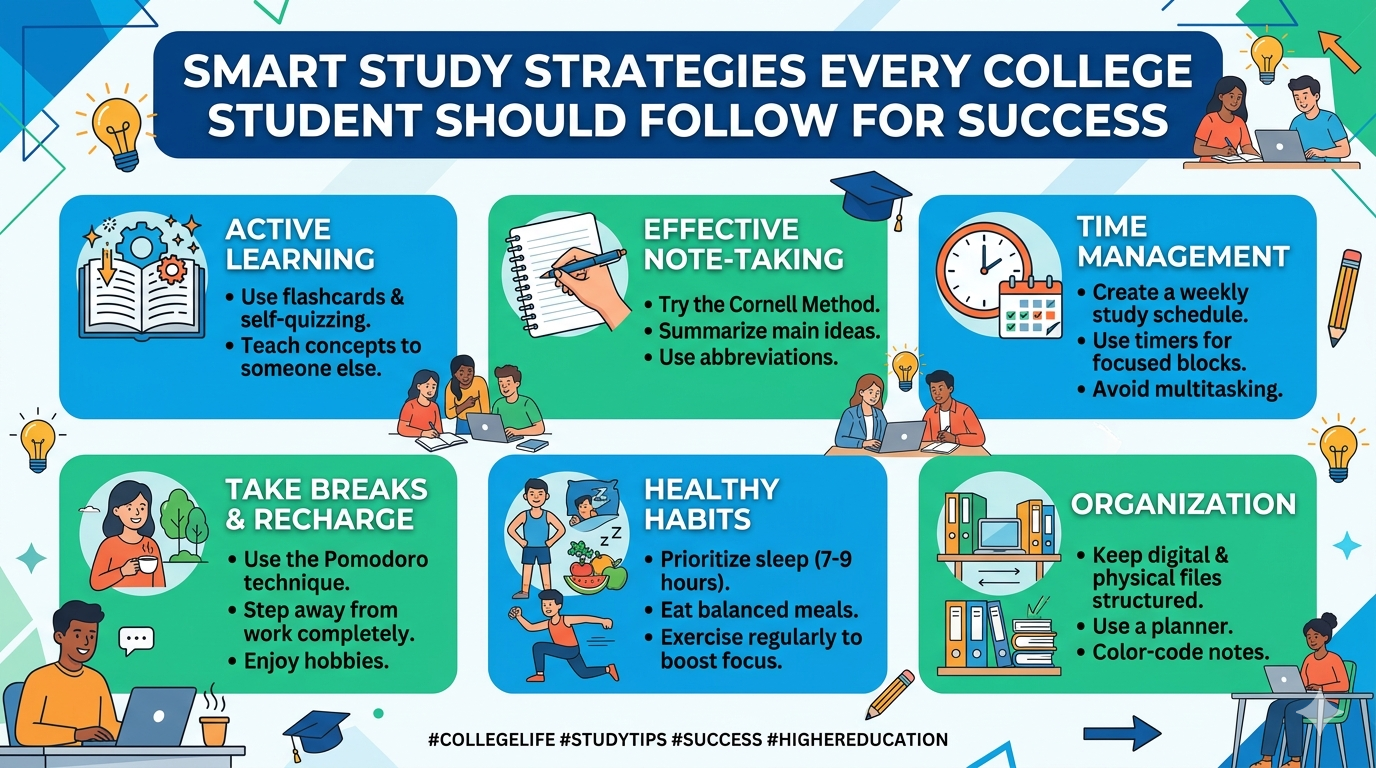
3. Use Active Learning Techniques
Passive reading is not enough for deep understanding. Active learning helps you engage with the material and retain information longer.
Effective active learning methods:
- Summarizing topics in your own words
- Teaching concepts to someone else
- Creating mind maps or diagrams
- Asking questions while studying
These techniques improve comprehension and make learning more interactive.
4. Practice the Pomodoro Technique
The Pomodoro Technique is a time management method that boosts focus and productivity. It involves studying in short, focused intervals.
How it works:
- Study for 25 minutes
- Take a 5-minute break
- Repeat the cycle 4 times
- Take a longer break (15–20 minutes)
This method prevents fatigue and keeps your mind fresh.
5. Maintain a Distraction-Free Environment
Your study environment plays a crucial role in your productivity. A cluttered or noisy space can reduce concentration.
To create an effective study environment:
- Keep your desk clean and organized
- Turn off unnecessary notifications
- Use noise-canceling headphones if needed
- Choose a quiet and well-lit place
A focused environment leads to better learning outcomes.
6. Take Smart Notes
Note-taking is a powerful study tool when done correctly. Instead of writing everything, focus on key concepts.
Popular note-taking methods:
- Cornell Method
- Bullet Point Notes
- Flow Notes
Use colors, highlights, and diagrams to make notes visually appealing and easy to revise.
7. Revise Regularly
Revision is essential for long-term retention. Many students forget topics because they don’t revise them consistently.
Follow the revision cycle:
- Review notes within 24 hours
- Revise again after one week
- Do a final revision before exams
Regular revision strengthens memory and reduces exam anxiety.
8. Practice Past Papers and Mock Tests
One of the smartest strategies is practicing previous exam papers. It helps you understand the exam pattern and improves time management.
Benefits:
- Identifies weak areas
- Builds confidence
- Improves speed and accuracy
Make mock tests a regular part of your study routine.
9. Focus on Conceptual Understanding
Memorization may help in the short term, but understanding concepts ensures long-term success.
Instead of rote learning:
- Understand the “why” behind topics
- Relate concepts to real-life examples
- Use videos or visual aids for clarity
Strong concepts make exams easier and improve overall knowledge.
10. Use Technology Wisely
Technology can be a powerful learning tool if used correctly.
Helpful tools include:
- Educational apps
- Online courses
- Digital flashcards
- Lecture recordings
However, avoid distractions like social media during study time.
11. Stay Healthy and Take Care of Yourself
Your physical and mental health directly affect your academic performance.
Healthy habits include:
- Getting 7–8 hours of sleep
- Eating nutritious food
- Exercising regularly
- Staying hydrated
A healthy body supports a sharp and focused mind.
12. Join Study Groups
Studying with peers can enhance understanding and make learning enjoyable.
Advantages of study groups:
- Exchange of ideas
- Clarification of doubts
- Increased motivation
Make sure the group stays focused and doesn’t turn into a distraction.
13. Avoid Procrastination
Procrastination is one of the biggest obstacles to success. Delaying tasks leads to stress and poor performance.
How to overcome procrastination:
- Break tasks into smaller steps
- Set deadlines
- Reward yourself after completing tasks
- Start with the easiest task to build momentum
Taking action immediately improves productivity.
14. Develop Self-Discipline
Discipline is more important than motivation. While motivation may fade, discipline ensures consistency.
Build discipline by:
- Following a routine
- Avoiding distractions
- Staying committed to your goals
Consistency over time leads to significant results.
15. Track Your Progress
Regularly evaluate your performance to identify strengths and weaknesses.
Ways to track progress:
- Weekly self-assessments
- Monitoring test scores
- Reviewing completed topics
Tracking helps you stay on the right path and make necessary improvements.
Conclusion
Success in college is not just about studying harder—it’s about studying smarter. By implementing these smart study strategies, students can improve focus, enhance retention, and achieve their academic goals with less stress.
Consistency, discipline, and the right approach are the foundations of success. Start small, stay committed, and gradually build habits that lead to long-term achievement. Remember, every successful student once struggled—but they succeeded because they chose the right strategies.
FAQs
1. What is the best study technique for college students?
The best technique varies for each student, but active learning methods like summarization, teaching others, and practicing mock tests are highly effective.
2. How many hours should a college student study daily?
It depends on the course, but 3–5 focused hours daily with proper breaks is generally effective.
3. How can I stay focused while studying?
Use techniques like the Pomodoro method, eliminate distractions, and study in a quiet environment.
4. Is group study better than studying alone?
Both have benefits. Group study helps with discussion, while solo study improves concentration. A mix of both works best.
5. How can I avoid procrastination?
Break tasks into smaller parts, set deadlines, and start immediately without overthinking.