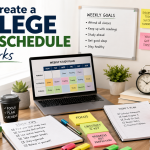

Discover effective time management tips for college students to study smarter, avoid procrastination, improve productivity, manage assignments, and balance academics with personal life.
College life can be exciting, but managing classes, assignments, exams, personal responsibilities, and social activities can sometimes feel overwhelming. Many students struggle to complete their academic work on time because they do not have a clear study plan. Others spend long hours studying but still find it difficult to remember information or prepare effectively for examinations.
The good news is that successful studying does not always require more hours. It requires better planning, consistent habits, and effective use of available time. By learning practical time management techniques, college students can improve their academic performance, reduce stress, and maintain a healthier balance between their studies and personal lives.
In this guide, we will explore useful time management tips for college students, explain how to study smarter rather than longer, and share practical strategies for building a productive daily routine.
Why Is Time Management Important for College Students?
Time management is the ability to organize and prioritize tasks so that important responsibilities receive enough attention. For college students, this means balancing lectures, homework, research projects, examinations, extracurricular activities, and personal commitments.
Without an effective schedule, students may postpone assignments, forget deadlines, or spend too much time on less important activities. These habits can lead to unnecessary pressure, poor sleep, and rushed preparation before exams.
Good time management helps students take control of their daily routines. When students know what they need to accomplish and when they should complete it, they can approach their responsibilities with greater confidence.
Some important benefits of time management include:
- Better academic performance: Regular study sessions help students understand and remember information.
- Reduced stress: Planning ahead prevents last-minute preparation and missed deadlines.
- Improved productivity: Prioritizing important tasks helps students use their study hours effectively.
- Better work-life balance: A realistic schedule leaves time for exercise, hobbies, friends, and rest.
- Greater independence: Students develop organizational skills that are useful throughout their careers.
Effective time management is not about filling every minute with work. It is about making intentional choices about how to spend your time.
1. Set Clear Academic Goals
One of the best time management tips for college students is to establish clear and achievable academic goals. When you know what you want to accomplish, it becomes easier to decide how to use your time.
Start by identifying your long-term goals. These might include achieving a particular grade, completing a research project, improving your understanding of a difficult subject, or preparing for a competitive examination.
Next, divide these goals into smaller tasks that you can complete each day or week.
For example, instead of setting a general goal such as “study biology,” create a more specific goal: “Review two chapters of biology and answer ten practice questions before Friday.”
Specific goals help you measure progress and make your study sessions more productive.
Consider using the SMART goal method. Your goals should be specific, measurable, achievable, relevant, and time-bound.
Review your goals weekly and adjust them when necessary. If you consistently struggle to complete your tasks, make your schedule more realistic rather than abandoning your plan.
2. Create a Weekly Study Schedule
A weekly study schedule helps you see how your academic responsibilities fit into your available time. Instead of deciding what to study at the last minute, you can plan your week in advance.
Begin by writing down your fixed commitments, including lectures, laboratory sessions, part-time work, commuting, and other regular activities. Then identify the available periods for studying.
Assign specific subjects or tasks to these periods. For example, you might reserve Monday afternoon for mathematics, Tuesday evening for reading assignments, and Wednesday morning for preparing a presentation.
When creating your schedule, consider the difficulty of each subject. Give challenging topics more time and divide large assignments into smaller sessions.
You should also include breaks, meals, exercise, and adequate sleep. A schedule that ignores your personal needs is difficult to maintain.
Practical tip: Use a paper planner, digital calendar, or scheduling application to keep track of your classes, deadlines, and study sessions. Choose the tool you find easiest to use consistently.
3. Prioritize Tasks According to Importance
Not every academic task deserves the same amount of attention at the same time. Learning how to prioritize helps you focus on the activities that matter most.
A simple method is to classify tasks into four categories:
| Priority | Type of task | Example |
|---|---|---|
| High | Important and urgent | Preparing for tomorrow’s examination |
| Medium | Important but not urgent | Reviewing weekly lecture notes |
| Lower | Urgent but less important | Responding to a nonessential message |
| Lowest | Neither urgent nor important | Browsing social media without a purpose |
Try to complete high-priority tasks first, particularly when they involve major deadlines or difficult concepts.
However, do not wait until an assignment becomes urgent before working on it. Important long-term tasks, such as exam preparation and research projects, should receive regular attention throughout the semester.
At the beginning of each day, identify your three most important tasks. Completing these tasks gives your day direction and helps prevent you from becoming distracted by minor activities.
4. Use the Pomodoro Technique to Stay Focused
The Pomodoro Technique is a popular time management method that divides work into focused sessions followed by short breaks.
A common approach is to study for 25 minutes, take a five-minute break, and repeat the cycle. After four sessions, take a longer break of approximately 15–30 minutes.
This method can be useful for students who find it difficult to concentrate for long periods.
During each study session, focus on one specific task. For example, you might spend 25 minutes solving mathematics problems or reviewing a set of lecture notes.
During breaks, stand up, stretch, drink water, or briefly step away from your desk. Avoid activities that may make it difficult to return to studying.
The Pomodoro Technique is flexible. If you concentrate better during longer sessions, try studying for 40–50 minutes before taking a break.
The goal is to maintain attention without exhausting yourself.
5. Avoid Multitasking While Studying
Many college students believe they can study effectively while checking messages, watching videos, or switching between multiple assignments. In reality, frequent task switching can interrupt concentration and make complex work take longer.
For example, reading a chapter while repeatedly checking your phone may prevent you from understanding and remembering important information.
Instead, practice single-tasking. Choose one assignment, close unrelated browser tabs, silence unnecessary notifications, and concentrate on the work in front of you.
If you are preparing for an examination, focus on that subject rather than moving between several unrelated topics every few minutes.
You can also keep a small notebook nearby to record distracting thoughts or tasks that come to mind. Return to these items after your study session.
Reducing distractions helps you make better use of each study hour and may improve the quality of your learning.
6. Break Large Assignments Into Smaller Tasks
Large projects can feel intimidating, especially when the deadline is several weeks away. Students sometimes delay starting because they do not know where to begin.
The solution is to divide the assignment into smaller, manageable steps.
For example, a research paper might involve:
- Selecting a topic and confirming the requirements.
- Finding reliable sources and taking notes.
- Creating an outline.
- Writing the first draft.
- Reviewing and editing the content.
- Checking citations and submitting the final paper.
Assign a deadline to each stage instead of relying on one final submission date.
This approach makes progress easier to track and reduces the risk of rushing through important work at the last minute.
Try to begin major assignments soon after they are announced. Even 20 minutes of initial research can make the next study session easier.
Remember that consistent progress is usually more manageable than completing an entire project in one long session.
7. Study Smarter With Active Learning
Time management is most effective when combined with good study methods. Spending three hours passively rereading a textbook may be less productive than spending one hour actively testing your understanding.
Active learning requires you to engage with information rather than simply look at it.
Useful techniques include:
Active recall: Close your textbook and try to explain a concept from memory. Then check your notes to identify missing information.
Practice questions: Solve problems or answer questions similar to those used in your examinations.
Spaced repetition: Review information over several days or weeks instead of trying to memorize everything in one sitting.
Teaching others: Explain a difficult topic to a friend or pretend you are teaching it to a beginner.
Practice exams: Complete sample questions under timed conditions to improve your familiarity with the examination format.
Choose the technique that matches your subject. Mathematics may require repeated problem-solving, while history may benefit from timelines, recall questions, and explaining cause-and-effect relationships.
By using active learning, you can make study sessions more focused and identify areas that need additional attention.
8. Use Technology to Organize Your Studies
Digital tools can help college students organize assignments, manage deadlines, and monitor their progress.
A calendar application can record lecture times, examination dates, project deadlines, and planned study sessions. A task manager can divide assignments into smaller activities and show which tasks remain unfinished.
Digital flashcard tools can support spaced repetition, while website blockers can limit access to distracting websites during study periods.
However, technology should simplify your routine rather than create additional distractions.
Avoid spending too much time comparing productivity applications or customizing complicated systems. Start with one calendar and one task list, then add tools only when you genuinely need them.
It is also useful to check your schedule at the beginning and end of each day. This small habit helps you prepare for upcoming responsibilities and adjust your priorities.
9. Learn to Manage Procrastination
Procrastination is one of the most common challenges college students face. It often happens when a task feels difficult, boring, confusing, or overwhelming.
Instead of waiting until you feel motivated, make the first step small enough to begin immediately.
For example, if you need to write an essay, start by opening the document and writing three possible headings. If you need to study a difficult subject, begin with five practice questions.
You can also use the five-minute rule: commit to working on a task for just five minutes. Starting often makes it easier to continue.
Identify the reasons you procrastinate. If your phone distracts you, put it away. If you do not understand the assignment, ask your instructor or a classmate for clarification. If you feel overwhelmed, divide the task into smaller steps.
Avoid criticizing yourself for every delay. Instead, focus on identifying the obstacle and choosing one practical action to overcome it.
Building a consistent starting routine can make studying easier over time.
10. Plan for Exams Well in Advance
Waiting until the night before an examination to begin studying can create unnecessary stress and limit your ability to review information effectively.
A better approach is to create an examination preparation plan several weeks in advance when possible.
Start by listing the subjects and topics you need to cover. Estimate how much time each topic requires, and distribute your study sessions across the available days.
Give extra attention to difficult subjects and topics you frequently get wrong. Schedule regular practice tests to assess your progress.
For example, a two-week examination plan might include reviewing lecture notes during the first few days, practicing questions during the following week, and revisiting weaker topics during the final days.
Avoid using the entire final day for learning new material. Reserve some time for reviewing key concepts and preparing the materials you need for the examination.
Make sure you get adequate sleep before the exam. Staying awake all night can impair attention and memory, making it harder to perform at your best.
11. Maintain a Healthy Balance Between Study and Personal Life
Good time management includes more than academic productivity. Students also need time to rest, exercise, eat well, socialize, and enjoy personal interests.
Trying to study continuously without breaks can lead to fatigue and reduced motivation. A sustainable routine gives you time to recover while keeping your academic responsibilities under control.
Schedule breaks just as you schedule classes and assignments. Take short walks, spend time with friends, prepare balanced meals, and maintain a consistent sleep routine.
It is also important to set boundaries. You do not need to accept every social invitation or participate in every activity if doing so interferes with important responsibilities. At the same time, avoid eliminating all enjoyable activities in the name of productivity.
The aim is to develop a balanced lifestyle that supports learning and well-being.
If your schedule regularly feels impossible to manage, review your commitments and adjust your workload where possible. Asking an academic adviser, instructor, or campus support service for help can also be useful.
12. Review Your Progress and Improve Your Routine
A study schedule should not remain unchanged if it is not working. Reviewing your progress allows you to identify what is effective and what needs improvement.
At the end of each week, ask yourself a few questions:
- Which tasks did I complete successfully?
- Which assignments took longer than expected?
- What distracted me most often?
- Which study techniques helped me understand information?
- What should I change next week?
Use your answers to make practical adjustments. If you consistently underestimate how long assignments take, allocate more time to similar tasks in the future.
If you find that studying in the evening is ineffective because you are tired, try moving difficult work to the morning or another period when you feel more alert.
Celebrate small achievements, such as finishing an assignment early or maintaining a regular study routine for a week. Recognizing progress can help you stay motivated.
Time management is a skill that develops through practice. Your routine does not have to be perfect; it simply needs to improve your ability to meet your responsibilities.
Sample Daily Study Schedule for College Students
The following example shows how a student might organize a typical weekday. Adjust the timings according to your class schedule, commute, work commitments, and personal needs.
| Time | Activity |
|---|---|
| 7:00–8:00 AM | Wake up, breakfast, and prepare for the day |
| 8:00 AM–12:00 PM | Attend lectures or practical classes |
| 12:00–1:00 PM | Lunch and rest |
| 1:00–2:00 PM | Review lecture notes and complete short tasks |
| 2:00–4:00 PM | Attend classes or work on assignments |
| 4:00–5:00 PM | Exercise, snack, or take a break |
| 5:00–6:30 PM | Focused study session for a challenging subject |
| 6:30–7:30 PM | Dinner and personal time |
| 7:30–8:30 PM | Practice questions or review key concepts |
| 8:30–9:00 PM | Prepare tomorrow’s task list |
| 9:00 PM onward | Relax and prepare for sleep |
This schedule is only an example, not a strict rule. Some students study best in the morning, while others concentrate better later in the day. The best schedule is one you can follow consistently without sacrificing sleep or essential responsibilities.
Source
https://sl1nk.com/5d3w7nc
https://l1nq.com/2hb13fg
Conclusion
Effective time management is an essential skill for college students who want to study smarter, improve academic performance, and reduce unnecessary stress. By setting clear goals, creating a weekly schedule, prioritizing important tasks, and avoiding distractions, students can make better use of their available time.
Techniques such as the Pomodoro Technique, active recall, spaced repetition, and breaking large assignments into smaller steps can make studying more manageable and productive. Planning for examinations early and maintaining a healthy balance between academics and personal life are equally important.
Remember that successful time management is not about studying every available hour. It is about choosing the right tasks, using effective learning strategies, and maintaining consistent habits.
Start with one or two techniques, practice them regularly, and adjust your routine as your needs change. Small improvements in how you organize your time can lead to meaningful progress throughout your college journey.
Frequently Asked Questions (FAQs)
1. What are the best time management tips for college students?
The best tips include creating a weekly study schedule, setting clear goals, prioritizing tasks, avoiding distractions, breaking large assignments into smaller steps, and reviewing progress regularly.
2. How many hours should a college student study each day?
The amount of study time depends on the course, workload, and individual learning needs. Instead of following a fixed number of hours, students should focus on understanding the material, completing assignments, and preparing consistently for examinations.
3. How can I stop procrastinating while studying?
Start with a small task, remove distractions, and set a short period for focused work. Breaking assignments into manageable steps and setting personal deadlines can also help reduce procrastination.
4. What is the Pomodoro Technique for studying?
The Pomodoro Technique involves studying in focused intervals, commonly 25 minutes long, followed by a five-minute break. After four intervals, students typically take a longer break.
5. How can I balance college studies and personal life?
Create a realistic schedule that includes classes, study sessions, meals, exercise, rest, and social activities. Prioritize important responsibilities while leaving room for relaxation and unexpected tasks.
6. Is studying for long hours better than studying efficiently?
Not necessarily. Longer sessions do not automatically produce better results. Focused study using active recall, practice questions, and spaced repetition can help students learn more effectively.
7. How can I prepare for college exams without stress?
Start preparing early, divide the syllabus into smaller topics, schedule regular revision, and practice sample questions. Maintain adequate sleep and avoid leaving all your preparation until the last few days.
8. Which tools can help college students manage their time?
Digital calendars, task management applications, digital flashcards, timers, and paper planners can help students organize deadlines and study sessions. Choose simple tools that suit your routine and avoid unnecessary complexity.
9. How do I create a study timetable that works?
List your fixed commitments, identify available study periods, prioritize challenging subjects, and assign realistic tasks to each session. Review the timetable weekly and adjust it when necessary.
10. What should I do if I cannot follow my study schedule?
Identify why the schedule is not working. You may have assigned too many tasks, underestimated the time required, or included too many distractions. Make the plan more realistic, start with smaller goals, and gradually build consistency.