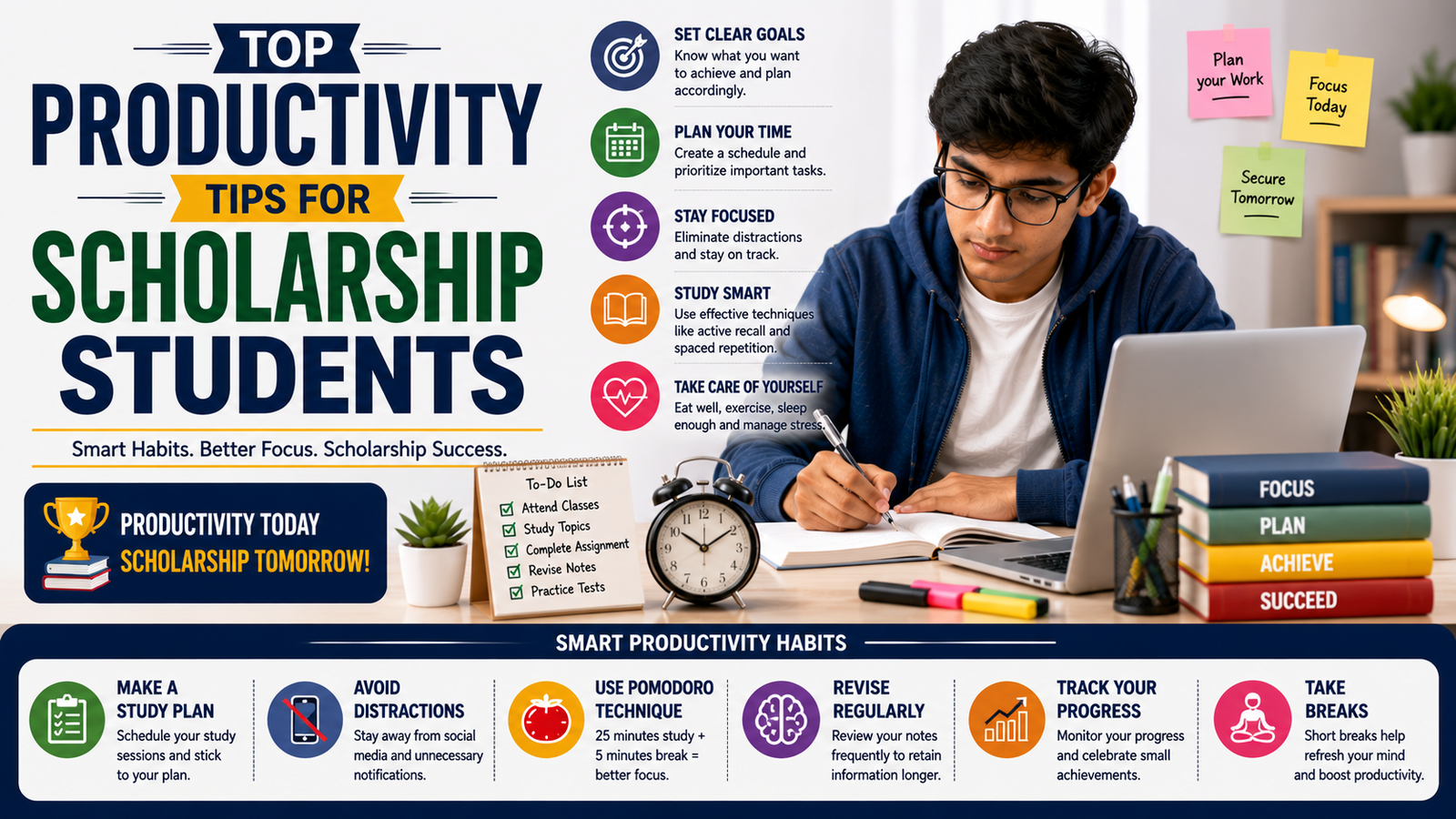

Scholarship students often face unique challenges while balancing academic performance, scholarship requirements, personal responsibilities, and future career goals. Managing assignments, exam preparation, extracurricular activities, and scholarship applications can become stressful without proper planning and productivity strategies.
Why Productivity Matters for Scholarship Students
Scholarship students are often expected to maintain strong academic performance while participating in additional activities such as projects, internships, leadership programs, or community work.
Being productive helps students:
- Manage time efficiently
- Complete tasks on schedule
- Reduce stress and anxiety
- Improve academic performance
- Maintain scholarship eligibility
- Balance study and personal life
Students who learn productivity skills early build habits that benefit them throughout their careers.
Set Clear Academic and Personal Goals
Goal setting is one of the most effective ways to improve productivity.
Create Short-Term Goals
Short-term goals help students stay motivated and organized.
Examples:
- Finish one chapter daily
- Complete assignments before deadlines
- Practice mock tests every weekend
Set Long-Term Goals
Long-term goals provide direction and purpose.
Examples:
- Maintain a high GPA
- Secure internship opportunities
- Win additional scholarships
- Prepare for postgraduate studies
Clear goals help students prioritize important tasks.
Create a Structured Study Schedule
A proper study routine helps students stay disciplined and avoid last-minute stress.
Use Time Blocking
Time blocking involves assigning specific time periods to tasks.
Example Schedule:
- 7:00–8:00 AM: Revision
- 10:00–12:00 PM: College classes
- 4:00–5:00 PM: Assignment work
- 7:00–8:00 PM: Scholarship preparation
This method improves focus and organization.
Prioritize Important Tasks
Students should focus on high-priority tasks first.
The Eisenhower Matrix is useful for categorizing:
- Urgent tasks
- Important tasks
- Non-essential tasks
Avoid Overloading Your Schedule
Trying to do too much in one day often reduces productivity and increases stress.
Eliminate Distractions While Studying
Distractions are one of the biggest productivity killers for students.
Reduce Phone Usage
Social media notifications interrupt concentration and reduce learning efficiency.
Helpful Solutions:
- Turn off notifications
- Use focus apps
- Keep phones away during study sessions
Create a Productive Study Environment
An ideal study space should be:
- Quiet
- Organized
- Comfortable
- Well-lit
A clean environment improves concentration and motivation.
Use Science-Backed Study Techniques
Effective study methods help students learn faster and retain information longer.
Active Recall
Active recall involves testing yourself instead of repeatedly rereading notes.
Examples:
- Flashcards
- Practice quizzes
- Self-testing
- Teaching concepts aloud
This method improves long-term memory retention.
Spaced Repetition
Spaced repetition means reviewing information over increasing intervals.
Example:
- Review after 1 day
- Review after 3 days
- Review after 1 week
This prevents forgetting and strengthens understanding.
Pomodoro Technique
The Pomodoro Technique improves focus and prevents burnout.
Method:
- Study for 25 minutes
- Take a 5-minute break
- Repeat four times
- Take a longer break afterward
This method helps maintain mental energy.
Improve Time Management Skills
Good time management is essential for scholarship students balancing multiple responsibilities.
Use Digital Planning Tools
Productivity apps help students stay organized.
Useful Apps:
- Google Calendar
- Notion
- Todoist
- Trello
These tools help track assignments, deadlines, and study schedules.
Avoid Procrastination
Procrastination reduces productivity and increases stress.
Ways to Overcome Procrastination:
- Break tasks into smaller steps
- Start with easy tasks
- Set deadlines
- Reward progress
Small actions create momentum.
Develop Effective Note-Taking Habits
Good notes save time during revision and improve understanding.
Cornell Note-Taking Method
This method divides notes into:
- Main notes
- Questions or keywords
- Summary section
It improves organization and memory retention.
Create Summary Sheets
Short summaries help students revise quickly before exams.
Use Visual Learning Methods
Mind maps, diagrams, and charts make complex topics easier to understand.
Maintain a Healthy Lifestyle for Better Productivity
Physical and mental health strongly affect academic performance.
Get Enough Sleep
Sleep is essential for:
- Memory consolidation
- Focus
- Mental clarity
- Stress reduction
Students should aim for 7–9 hours of sleep daily.
Eat Brain-Healthy Foods
Healthy nutrition improves concentration and energy.
Recommended Foods:
- Fruits
- Vegetables
- Nuts
- Whole grains
- Fish rich in omega-3
Exercise Regularly
Exercise improves mood, focus, and mental performance.
Helpful Activities:
- Walking
- Yoga
- Cycling
- Stretching exercises
Even 20 minutes of exercise daily can improve productivity.
Learn to Manage Stress Effectively
Scholarship students often experience pressure to perform well academically.
Practice Relaxation Techniques
Stress management methods include:
- Deep breathing
- Meditation
- Journaling
- Listening to music
These activities help maintain emotional balance.
Avoid Comparing Yourself to Others
Every student learns differently. Focus on personal growth and improvement instead of competition.
Take Breaks Without Guilt
Rest improves productivity and prevents mental exhaustion.
Build Consistency Instead of Motivation
Motivation changes daily, but consistent habits lead to long-term success.
Create Daily Routines
Daily habits reduce decision fatigue and improve discipline.
Track Your Progress
Tracking completed tasks helps students stay motivated and focused.
Celebrate Small Achievements
Rewarding progress builds confidence and encourages consistency.
Examples:
- Watching a favorite show
- Spending time with friends
- Taking a relaxing break
Best Productivity Apps for Scholarship Students
Technology can improve productivity when used correctly.
Notion
Useful for:
- Notes
- Task management
- Study planning
Forest
Encourages focus by reducing phone distractions.
Google Calendar
Helps manage schedules and deadlines efficiently.
Quizlet
Useful for flashcards and active recall practice.
Common Productivity Mistakes Students Make
Understanding mistakes can help students improve faster.
Multitasking
Doing multiple tasks simultaneously reduces concentration and efficiency.
Lack of Planning
Without a clear schedule, students waste time deciding what to do next.
Perfectionism
Trying to make everything perfect often delays progress.
Ignoring Mental Health
Stress and burnout reduce academic performance significantly.
Future of Student Productivity in 2026
Technology and AI are transforming the way students study and manage tasks.
Future productivity trends include:
- AI-powered study planners
- Personalized learning systems
- Smart scheduling tools
- Virtual study assistants
- Advanced productivity apps
Students who adapt to modern productivity methods will gain significant academic advantages.
Source
https://sl1nk.com/fevda2d
https://l1nq.com/v5ec421
Conclusion
Productivity is one of the most important skills scholarship students can develop for academic and personal success. Effective time management, focused study habits, proper planning, and healthy routines help students manage responsibilities without becoming overwhelmed.
By using science-backed learning techniques such as active recall, spaced repetition, and the Pomodoro Technique, students can improve concentration, retain information more effectively, and reduce stress. Maintaining consistency, avoiding distractions, and prioritizing mental and physical health are equally important for long-term productivity.
Students who build strong productivity habits today will not only perform better academically but also develop valuable life skills that support future career growth and success.
FAQs
1. Why is productivity important for scholarship students?
Productivity helps students manage academic responsibilities, maintain scholarship requirements, and reduce stress.
2. What is the best productivity technique for students?
The Pomodoro Technique, active recall, and time blocking are among the most effective productivity methods.
3. How can students avoid procrastination?
Students can reduce procrastination by breaking tasks into smaller steps, setting deadlines, and removing distractions.
4. Which apps are best for student productivity?
Popular productivity apps include Notion, Google Calendar, Quizlet, Forest, and Todoist.
5. How many hours should scholarship students study daily?
Most students benefit from 3–6 focused study hours daily depending on workload and goals.