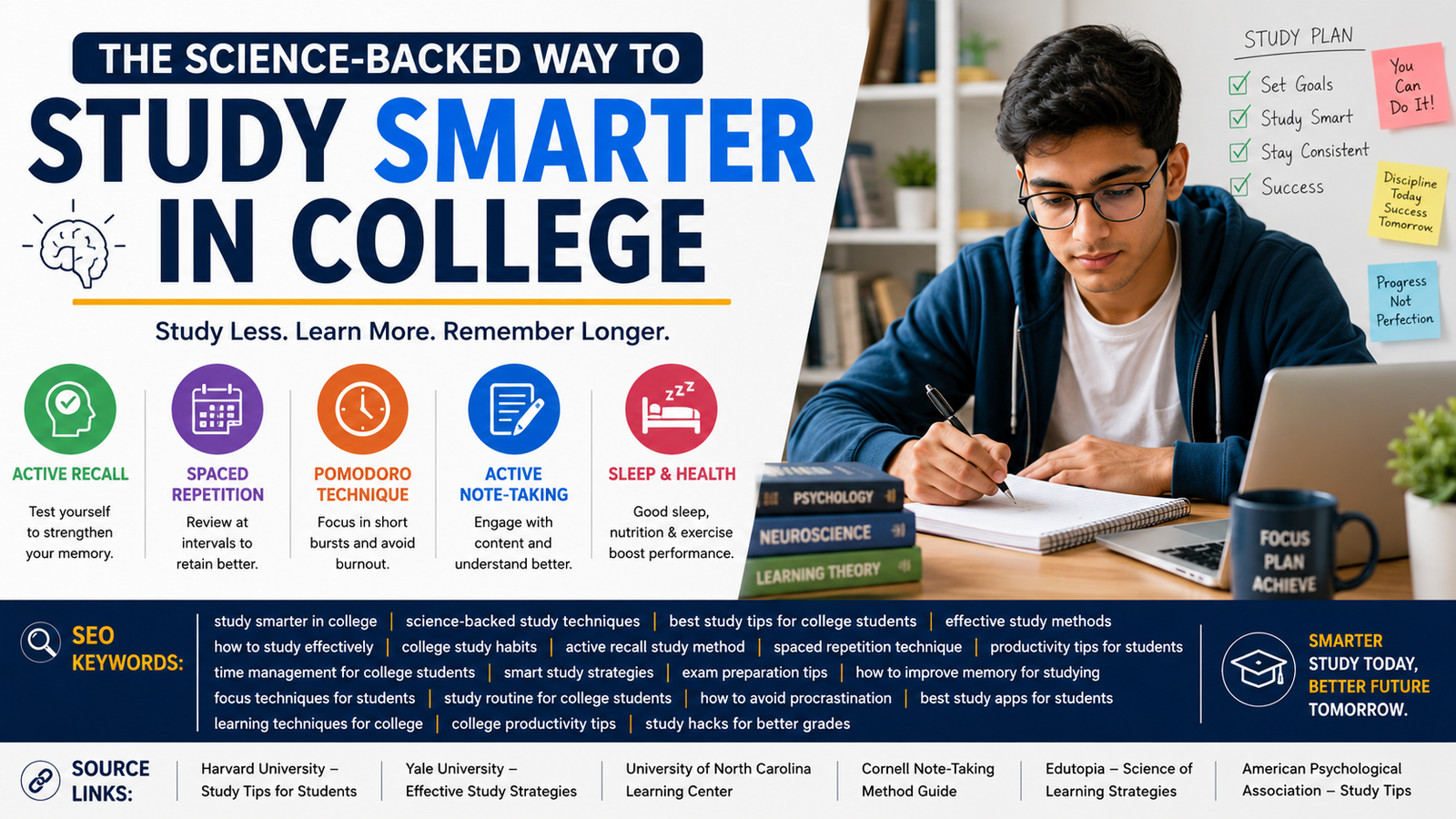

College life can be exciting, challenging, and sometimes overwhelming. Between assignments, exams, projects, internships, and social activities, students often struggle to manage their time and maintain academic performance. Many students spend long hours studying but still fail to achieve the results they expect because they rely on ineffective study habits.
Why Traditional Study Methods Often Fail
Many college students rely on outdated study techniques such as rereading textbooks, highlighting large sections of notes, or cramming the night before exams. While these methods may feel productive, research shows they are often ineffective for long-term learning.
Common Problems with Traditional Studying
- Passive reading reduces retention
- Cramming increases stress and forgetfulness
- Multitasking lowers concentration
- Long study sessions cause mental fatigue
- Lack of revision weakens memory over time
The human brain learns best through active engagement, repetition, and proper rest. Understanding how memory works can help students improve learning efficiency significantly.
The Science Behind Effective Learning
Learning involves creating and strengthening neural connections in the brain. When students review information repeatedly and actively use it, these connections become stronger.
Two major scientific principles behind effective learning are:
Active Recall
Active recall means testing yourself instead of simply rereading notes. Research shows that retrieving information from memory strengthens learning more effectively than passive review.
Examples include:
- Flashcards
- Practice quizzes
- Self-testing
- Explaining concepts aloud
Spaced Repetition
Spaced repetition involves reviewing information at increasing intervals over time rather than studying everything at once.
Research proves that spacing study sessions improves long-term memory retention and reduces forgetting.
For example:
- Review after 1 day
- Review again after 3 days
- Review after 1 week
- Continue periodic revision
This method is widely used in language learning and medical education because of its effectiveness.
Best Science-Backed Study Techniques for College Students
Using the right study strategies can dramatically improve academic performance.
Pomodoro Technique
The Pomodoro Technique helps students maintain focus and avoid mental exhaustion.
How It Works:
- Study for 25 minutes
- Take a 5-minute break
- Repeat four times
- Take a longer break afterward
This method improves concentration and prevents burnout during long study sessions.
Active Note-Taking
Writing organized notes improves understanding and memory retention.
Effective Methods:
- Cornell note-taking system
- Mind maps
- Bullet-point summaries
- Color-coded notes
Students should focus on understanding concepts instead of copying information word-for-word.
Interleaving Method
Interleaving means mixing different subjects or topics during study sessions instead of studying one topic continuously for hours.
Example:
Instead of:
- Math for 3 hours
Try:
- Math for 1 hour
- Science for 1 hour
- English for 1 hour
This technique improves problem-solving ability and deeper understanding.
Teaching What You Learn
One of the most powerful ways to learn is to teach someone else.
Known as the “Feynman Technique,” this method forces students to simplify complex ideas and identify gaps in understanding.
Steps:
- Study the concept
- Explain it in simple language
- Identify confusing parts
- Review and simplify again
How Sleep Affects Academic Performance
Many college students sacrifice sleep to study longer, but science shows this often reduces productivity and memory retention.
During sleep, the brain processes and stores information learned throughout the day.
Benefits of Proper Sleep:
- Better concentration
- Improved memory consolidation
- Faster problem-solving
- Reduced stress levels
Experts recommend 7–9 hours of sleep for optimal cognitive performance.
The Role of Nutrition and Exercise in Studying
Physical health strongly impacts mental performance and learning ability.
Brain-Boosting Foods
Certain foods improve focus and energy levels:
- Nuts and seeds
- Fruits and vegetables
- Fish rich in omega-3
- Dark chocolate
- Whole grains
Importance of Hydration
Even mild dehydration can reduce concentration and memory performance. Students should drink enough water throughout the day.
Exercise and Learning
Regular physical activity improves blood flow to the brain and reduces stress.
Recommended Activities:
- Walking
- Yoga
- Cycling
- Gym workouts
- Stretching exercises
Even 20–30 minutes of exercise daily can improve focus and mood.
How to Avoid Procrastination in College
Procrastination is one of the biggest obstacles to academic success.
Students often delay studying because tasks feel overwhelming or stressful.
Effective Ways to Beat Procrastination
Break Tasks into Smaller Steps
Large assignments become easier when divided into manageable sections.
Set Clear Goals
Specific goals improve motivation and productivity.
Remove Distractions
Keep phones and social media away during study sessions.
Use Study Timers
Timers create urgency and help maintain focus.
Reward Yourself
Small rewards after completing tasks increase motivation.
Best Study Environment for Maximum Focus
The study environment affects concentration and productivity more than many students realize.
Characteristics of an Effective Study Space
- Quiet and distraction-free
- Comfortable seating
- Good lighting
- Organized desk
- Minimal digital distractions
Some students focus better with soft instrumental music or ambient sounds, while others prefer complete silence.
Technology and Study Tools for College Students
Technology can improve studying when used correctly.
Best Study Apps
Notion
Helps organize notes, schedules, and assignments.
Quizlet
Useful for flashcards and active recall practice.
Forest
Encourages focus by reducing phone usage.
Google Calendar
Helps manage deadlines and study schedules.
Creating a Smart Study Routine
Consistency is more important than occasional long study sessions.
Steps to Build a Study Routine
Create a Weekly Schedule
Plan study sessions in advance.
Prioritize Difficult Subjects
Study challenging topics when energy levels are highest.
Include Breaks
Regular breaks improve productivity and prevent mental fatigue.
Review Daily
Short daily revision sessions strengthen memory retention.
Common Study Mistakes College Students Make
Understanding what not to do is equally important.
Studying Without a Plan
Random studying wastes time and reduces effectiveness.
Cramming Before Exams
Last-minute studying increases stress and weakens long-term memory.
Multitasking
Using social media while studying lowers focus significantly.
Ignoring Mental Health
Stress and anxiety negatively impact academic performance.
Long-Term Benefits of Studying Smarter
Science-backed study methods not only improve grades but also help students develop lifelong learning skills.
Benefits Include:
- Better academic performance
- Reduced stress
- Increased confidence
- Improved time management
- Stronger critical thinking skills
- Better career preparation
Students who learn how to study effectively in college often perform better in professional careers as well.
Source
https://sl1nk.com/hhp0e8w
https://sl1nk.com/qaq24pm
Conclusion
Success in college is not about studying for endless hours but about using smarter and scientifically proven learning techniques. Methods such as active recall, spaced repetition, interleaving, and effective time management can significantly improve memory, focus, and academic performance.
In addition to study strategies, proper sleep, healthy nutrition, regular exercise, and a distraction-free study environment play essential roles in successful learning. Students who build consistent study routines and avoid procrastination are more likely to achieve their academic goals with less stress and greater confidence.
By applying science-backed study methods, college students can improve productivity, retain information more effectively, and create a strong foundation for future success.
FAQs
1. What is the best study method for college students?
Active recall and spaced repetition are considered among the most effective science-backed study methods.
2. How many hours should college students study daily?
Most students benefit from 2–5 focused study hours daily, depending on workload and course difficulty.
3. Is studying at night better than studying in the morning?
It depends on individual preference, but many students focus better during their most energetic hours.
4. Does listening to music help while studying?
Soft instrumental or ambient music may help concentration for some students, but distracting music with lyrics can reduce focus.
5. How can students improve memory retention?
Using active recall, spaced repetition, proper sleep, and regular revision can improve memory retention significantly.