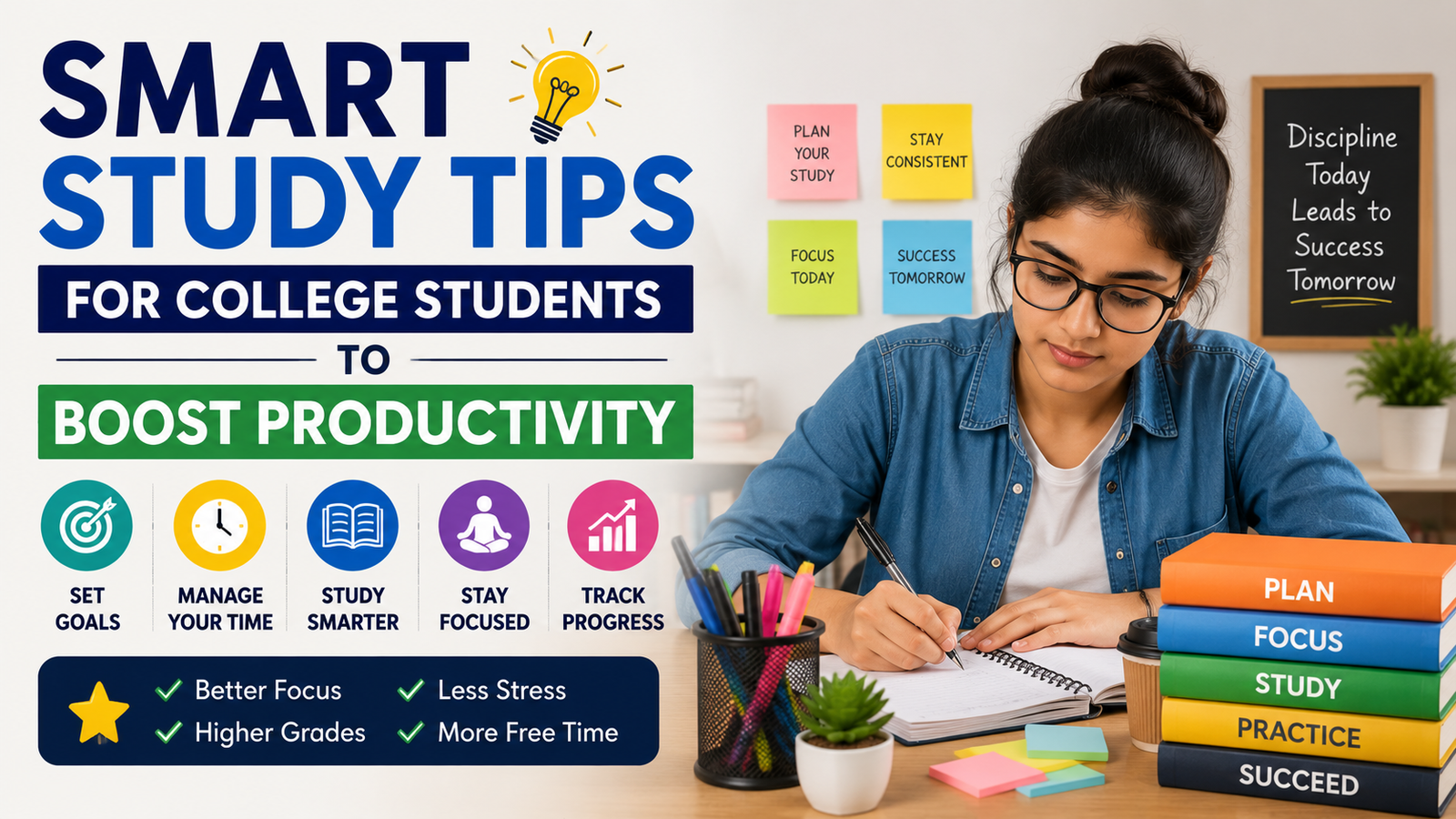

College life is full of opportunities, but it also brings challenges like heavy coursework, deadlines, and exams. Many students struggle not because they lack ability, but because they don’t follow effective study strategies. Productivity in studying is not about spending long hours with books—it’s about using the right techniques to learn efficiently.
In this guide, you’ll discover smart study tips that will help you stay focused, manage your time better, and boost your overall productivity as a college student.
Understand the Concept of Smart Studying
Smart studying means focusing on quality over quantity. Instead of studying for long hours without direction, you use techniques that improve understanding and retention.
It involves:
- Setting clear goals
- Using effective methods
- Avoiding distractions
- Reviewing regularly
When you study smart, you achieve better results in less time.
Create a Structured Study Plan
A proper study plan is the foundation of productivity. Without a plan, it’s easy to waste time and feel overwhelmed.
To create an effective plan:
- Divide your syllabus into smaller sections
- Set daily and weekly goals
- Allocate time for revision
- Include breaks
Consistency is key. Even a few focused hours daily can make a big difference.
Use the Pomodoro Technique for Better Focus
The Pomodoro Technique is a popular time management method that helps improve concentration.
How it works:
- Study for 25 minutes
- Take a 5-minute break
- Repeat the cycle 4 times
- Take a longer break (15–30 minutes)
This method prevents burnout and keeps your mind fresh during study sessions.
Eliminate Distractions
Distractions are one of the biggest productivity killers. Social media, notifications, and noise can reduce your focus.
To avoid distractions:
- Keep your phone away
- Use apps that block social media
- Study in a quiet environment
- Inform others not to disturb you
A distraction-free space helps you complete tasks faster and more effectively.
Practice Active Learning Techniques
Passive reading is not enough for effective learning. Active learning helps you understand and remember better.
Try these techniques:
- Active recall: Test yourself regularly
- Spaced repetition: Revise topics over time
- Teaching others: Explaining concepts improves clarity
These methods improve long-term memory and exam performance.
Take Smart Notes
Good notes make revision easier and faster. Instead of copying everything, focus on key points.
Effective note-taking methods:
- Cornell method
- Mind maps
- Bullet points
Use colors, diagrams, and keywords to make your notes more engaging and easy to understand.
Set Clear Goals and Priorities
Setting goals helps you stay motivated and focused. Without goals, it’s easy to lose direction.
Tips for goal setting:
- Set short-term and long-term goals
- Prioritize important subjects
- Track your progress
Clear goals give you a sense of direction and achievement.
Maintain a Healthy Lifestyle
Your productivity depends on your physical and mental health.
Healthy habits include:
- Getting 7–8 hours of sleep
- Eating nutritious food
- Exercising regularly
A healthy body improves concentration, memory, and energy levels.
Use Technology Wisely
Technology can either help or distract you. When used correctly, it can boost productivity.
Helpful tools include:
- Study apps for scheduling
- Online learning platforms
- Digital flashcards
Avoid overusing social media and focus on tools that support your studies.
Revise Regularly
Revision is essential for long-term retention. Don’t wait until exams to start revising.
Effective revision tips:
- Review notes weekly
- Practice mock tests
- Summarize chapters
Regular revision strengthens your understanding and reduces exam stress.
Stay Motivated and Positive
Motivation plays a crucial role in productivity. Staying positive helps you overcome challenges.
Ways to stay motivated:
- Reward yourself after completing tasks
- Surround yourself with positive people
- Avoid negative thoughts
A positive mindset keeps you consistent and focused.
Source
Conclusion
Boosting productivity as a college student doesn’t require studying all day—it requires studying smart. By following the right strategies like planning, active learning, time management, and maintaining a healthy lifestyle, you can achieve better results with less stress.
Remember, consistency is more important than perfection. Start implementing these smart study tips today, and you’ll notice a significant improvement in your academic performance.
FAQs
1. How can I study more productively in college?
Focus on smart study techniques like active recall, time management, and avoiding distractions rather than studying for long hours.
2. What is the best study method for students?
Active recall and spaced repetition are considered the most effective study methods.
3. How many hours should I study daily?
2–4 hours of focused study is usually enough if done consistently.
4. How can I avoid distractions while studying?
Keep your phone away, use blocking apps, and create a quiet study environment.
5. Can technology improve study productivity?
Yes, using study apps, online tools, and digital resources can significantly improve productivity when used wisely.