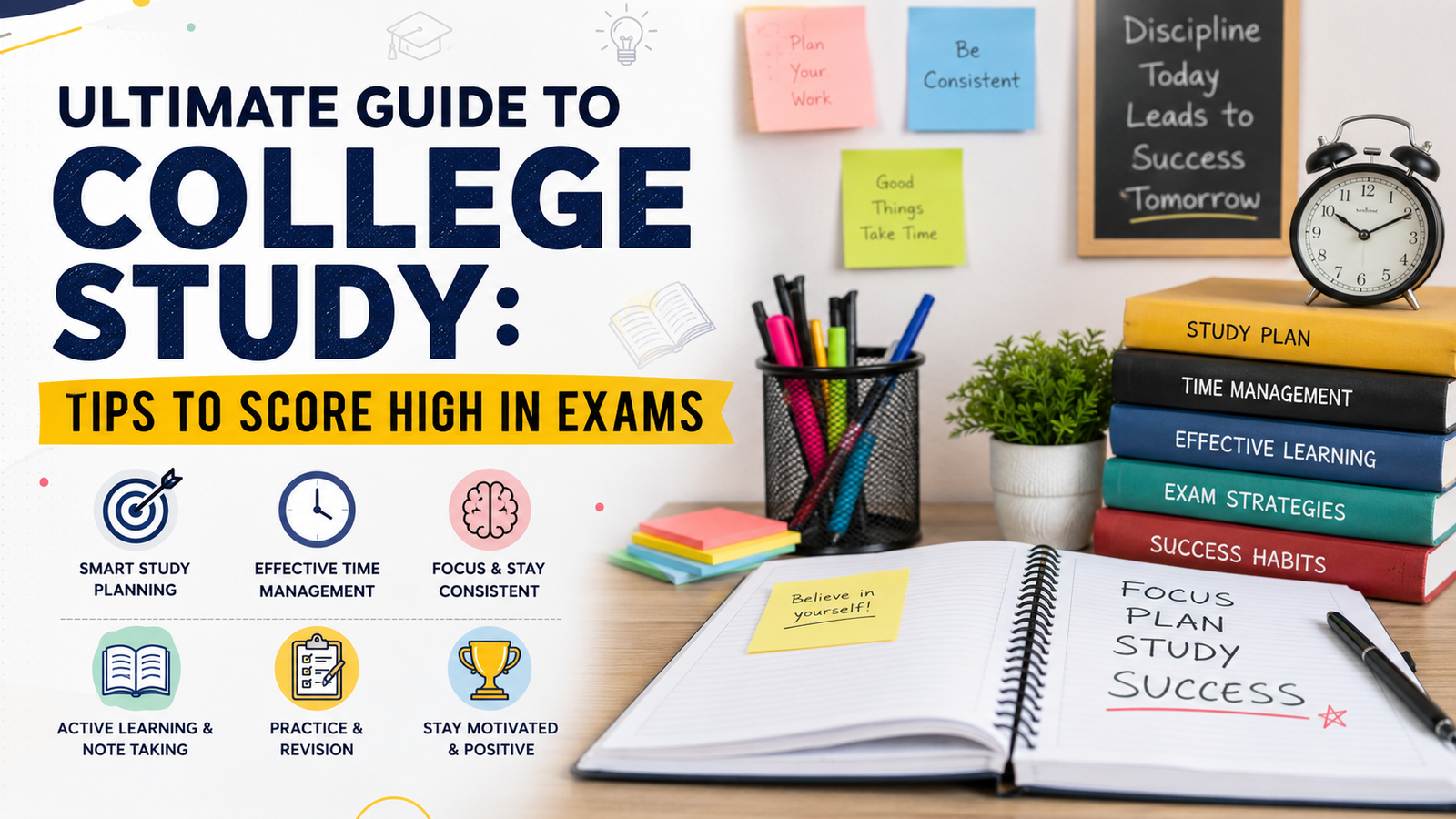

Learn the ultimate college study tips to score high in exams. Discover effective study techniques, time management strategies, and smart revision methods for success.
College life is exciting, but it also comes with academic pressure, deadlines, and exams that can feel overwhelming. Many students struggle not because they lack intelligence, but because they don’t follow the right study techniques. The truth is, studying smarter—not harder—is the key to scoring high marks.
In this guide, you’ll learn proven strategies that will help you stay focused, manage your time, and improve your performance in exams without burning out
Understand Your Learning Style
Every student learns differently. Some people understand concepts better through visuals, while others prefer reading or listening. Identifying your learning style can significantly improve your study efficiency.
- Visual learners benefit from diagrams, charts, and videos
- Auditory learners learn better through lectures and discussions
- Kinesthetic learners prefer hands-on practice
Once you know your style, tailor your study methods accordingly. For example, if you are a visual learner, use mind maps and color-coded notes to understand complex topics.
Create a Realistic Study Plan
A well-structured study plan helps you stay organized and reduces last-minute stress. Instead of cramming everything the night before exams, break your syllabus into smaller parts and assign them to specific days.
Make sure your plan includes:
- Daily study goals
- Time for revision
- Short breaks to avoid burnout
Consistency is more important than studying for long hours occasionally. Even 2–3 focused hours daily can be more effective than 10 hours of distracted studying.
Use Active Learning Techniques
Passive reading is one of the biggest mistakes students make. Instead, engage actively with the material.
Some effective techniques include:
- Active recall: Test yourself instead of rereading
- Spaced repetition: Review topics at intervals
- Teaching others: Explaining concepts strengthens understanding
These methods improve long-term memory and help you retain information during exams.
Eliminate Distractions While Studying
In today’s digital world, distractions are everywhere—especially smartphones and social media. To stay focused:
- Keep your phone on silent or in another room
- Use apps that block distractions
- Study in a quiet, dedicated space
Creating a distraction-free environment helps you concentrate better and complete your study sessions faster.
Take Effective Notes
Good notes are your best revision tool. Instead of writing everything, focus on key points and concepts.
Try these note-taking methods:
- Cornell method for structured notes
- Mind mapping for visual learning
- Bullet points for quick revision
Clear and concise notes save time and make revision easier before exams.
Practice Previous Year Papers
One of the smartest ways to prepare for exams is solving previous year question papers. This helps you:
- Understand the exam pattern
- Identify important topics
- Improve time management
Practicing regularly builds confidence and reduces exam anxiety
Focus on Time Management
Time management is crucial for academic success. Many students fail not because they don’t know the answers, but because they run out of time.
Tips to manage your time better:
- Use the Pomodoro technique (25 minutes study + 5 minutes break)
- Prioritize difficult subjects first
- Avoid multitasking
By managing your time effectively, you can cover more syllabus with less stress.
Maintain a Healthy Lifestyle
Your physical and mental health play a major role in your academic performance.
Make sure you:
- Get 7–8 hours of sleep daily
- Eat healthy food
- Exercise regularly
A healthy body leads to a sharp mind, which helps you focus better during study sessions and exams.
Stay Motivated and Positive
Staying motivated throughout the semester can be challenging. However, maintaining a positive mindset is essential for success.
- Set small, achievable goals
- Reward yourself after completing tasks
- Avoid comparing yourself with others
Remember, progress matters more than perfection.
Revise Smartly Before Exams
Revision is the key to scoring high marks. Instead of studying new topics at the last moment, focus on revising what you’ve already learned.
Effective revision strategies include:
- Reviewing notes regularly
- Practicing mock tests
- Summarizing chapters
Smart revision boosts confidence and improves recall during exams.
Sources
https://shorturl.at/Y17nF
https://shorturl.at/TMhoZ
Conclusion
Scoring high in college exams doesn’t require studying all day and night. It requires the right approach, discipline, and consistency. By understanding your learning style, following a structured study plan, and using active learning techniques, you can significantly improve your academic performance.
Remember, success is not about how many hours you study, but how effectively you use those hours. Start implementing these strategies today, and you’ll see a noticeable difference in your results.
FAQs
1. How many hours should a college student study daily?
It depends on the individual, but 2–4 hours of focused study daily is usually enough if done consistently.
2. What is the best study method for exams?
Active recall and spaced repetition are considered the most effective study methods for long-term retention.
3. How can I avoid distractions while studying?
Keep your phone away, use website blockers, and create a dedicated study environment.
4. Is it good to study at night or in the morning?
It depends on your productivity. Some students focus better in the morning, while others prefer late-night study sessions.
5. How can I improve my memory for exams?
Practice active recall, revise regularly, and maintain a healthy lifestyle to boost memory.