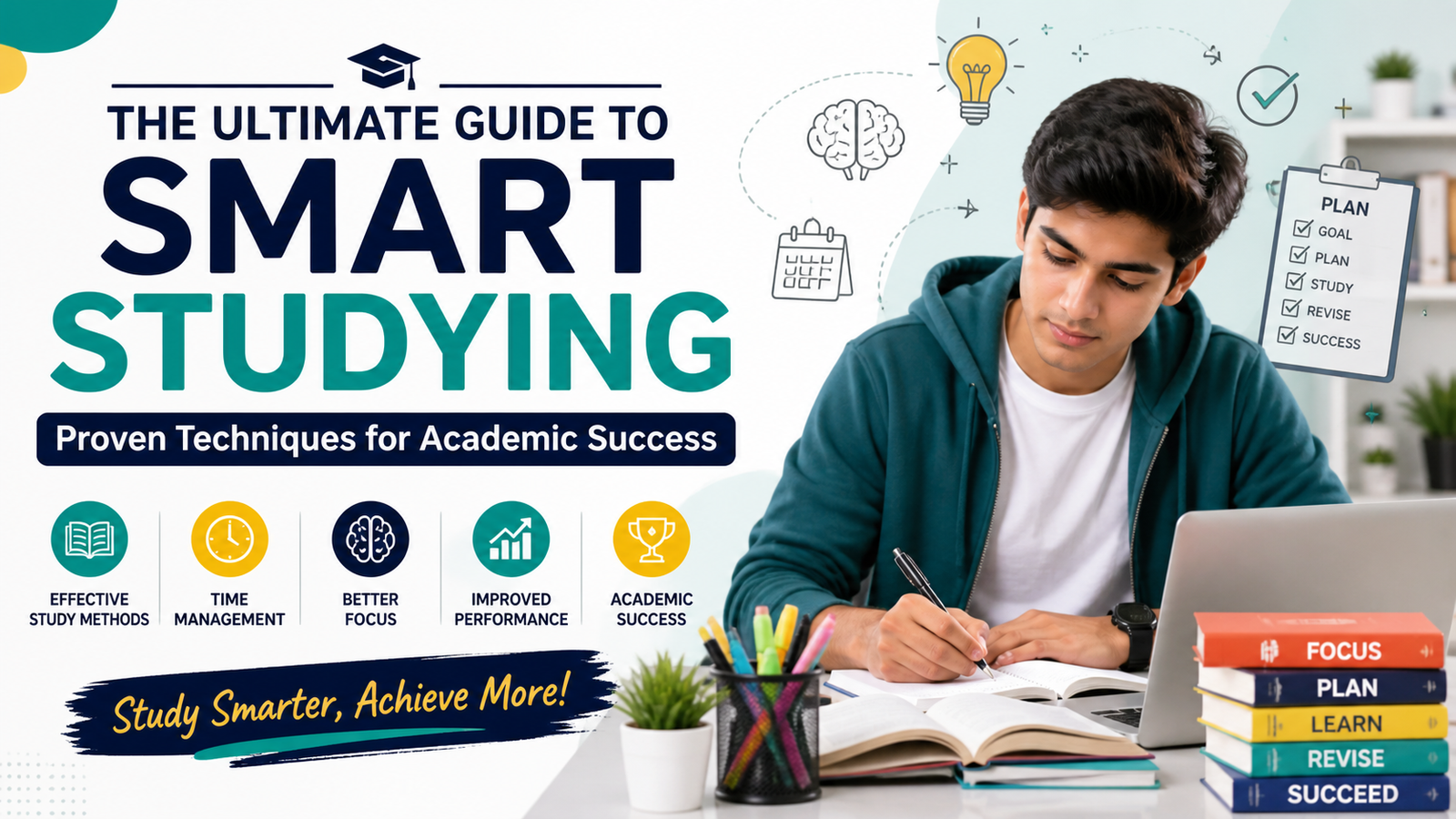

Discover effective study techniques, time management tips, and productivity strategies to improve academic performance and achieve success in college.
In today’s competitive academic environment, simply spending long hours with books is no longer enough. Students need to adopt smart study techniques that improve retention, understanding, and performance. Whether you are preparing for exams, completing assignments, or aiming for higher grades, the way you study matters more than how long you study.
This guide explores practical and proven strategies that help students maximize productivity, reduce stress, and achieve academic excellence.
Why Smart Studying Matters
Traditional studying often focuses on repetition without understanding. However, research shows that active learning methods significantly improve memory and comprehension.
Smart studying helps you:
- Save time and effort
- Improve long-term memory
- Reduce exam stress
- Increase confidence
- Achieve better academic results
Understanding Your Learning Style
Every student learns differently. Identifying your learning style can make studying more effective.
1. Visual Learners
Prefer diagrams, charts, and videos.
2. Auditory Learners
Learn better through listening, discussions, and lectures.
3. Reading/Writing Learners
Understand information through reading and writing notes.
4. Kinesthetic Learners
Prefer hands-on learning and practical experiences.
Tip: Combine multiple methods for better results instead of relying on just one.
Top Study Techniques That Actually Work
1. Active Recall
Instead of rereading notes, test yourself frequently. Ask questions and try to recall answers without looking.
2. Spaced Repetition
Study information over increasing intervals rather than cramming all at once. This improves long-term retention.
3. Pomodoro Technique
Study for 25 minutes, then take a 5-minute break. Repeat this cycle to maintain focus and avoid burnout.
4. Mind Mapping
Create visual diagrams to connect ideas. This helps in better understanding and memory retention.
5. Teaching Others
Explaining concepts to someone else strengthens your understanding.
Effective Time Management for Students
Time management is one of the most important skills for academic success.
Create a Study Schedule
Plan your study sessions in advance. Allocate time for each subject based on difficulty.
Set Realistic Goals
Break large tasks into smaller, manageable goals.
Avoid Multitasking
Focus on one task at a time for better productivity.
Use Digital Tools
Apps like calendars and task managers help organize your schedule.
How to Stay Focused While Studying
Distractions are one of the biggest obstacles to effective studying.
Tips to Improve Focus:
- Keep your phone away or on silent
- Study in a quiet environment
- Use noise-canceling headphones if needed
- Take regular breaks
- Practice meditation or deep breathing
The Importance of Note-Taking
Good notes make revision easier and more effective.
Popular Note-Taking Methods:
- Cornell Method: Divide your page into sections for notes, cues, and summary
- Outline Method: Organize notes using headings and bullet points
- Charting Method: Use tables for comparison-based subjects
Tip: Always revise and summarize your notes after each study session.
Healthy Habits That Improve Study Performance
Your physical and mental health directly affect your ability to study.
1. Sleep Well
Aim for 7–8 hours of sleep for better concentration and memory.
2. Eat Healthy
Consume brain-boosting foods like nuts, fruits, and vegetables.
3. Stay Hydrated
Dehydration can reduce focus and energy levels.
4. Exercise Regularly
Physical activity improves brain function and reduces stress.
Exam Preparation Strategies
Preparing for exams requires a strategic approach.
Start Early
Avoid last-minute cramming.
Practice Previous Papers
Understand the exam pattern and improve time management.
Revise Regularly
Frequent revision helps reinforce concepts.
Stay Calm
Manage stress through relaxation techniques.
Common Study Mistakes to Avoid
- Studying without a plan
- Cramming before exams
- Ignoring weak subjects
- Not taking breaks
- Passive reading without understanding
Avoiding these mistakes can significantly improve your results.
Using Technology for Better Studying
Technology can enhance learning when used wisely.
Helpful Tools:
- Online courses and tutorials
- Educational apps
- Digital flashcards
- Productivity tools
However, avoid unnecessary distractions like social media while studying.
Building Consistency and Discipline
Success in academics depends on consistency.
How to Stay Consistent:
- Set daily study goals
- Track your progress
- Reward yourself for achievements
- Stay motivated by reminding yourself of your goals
Discipline is the key to turning good study habits into long-term success.
Conclusion
Smart studying is not about working harder but working smarter. By adopting effective techniques like active recall, spaced repetition, and proper time management, students can significantly improve their academic performance.
Consistency, focus, and a healthy lifestyle play a crucial role in achieving success. Remember, small daily improvements lead to big results over time. Start implementing these strategies today to transform your learning experience and achieve your academic goals.
FAQs
1. What is the best study technique for students?
Active recall and spaced repetition are considered the most effective techniques for long-term learning.
2. How many hours should I study daily?
It depends on your goals, but 3–5 focused hours are generally more effective than long, unfocused sessions.
3. How can I improve my concentration while studying?
Eliminate distractions, use the Pomodoro technique, and study in a quiet environment.
4. Is studying at night effective?
It depends on your personal preference. Some students perform better at night, while others prefer mornings.
5. How can I avoid procrastination?
Break tasks into smaller steps, set deadlines, and start with the easiest task to build momentum.