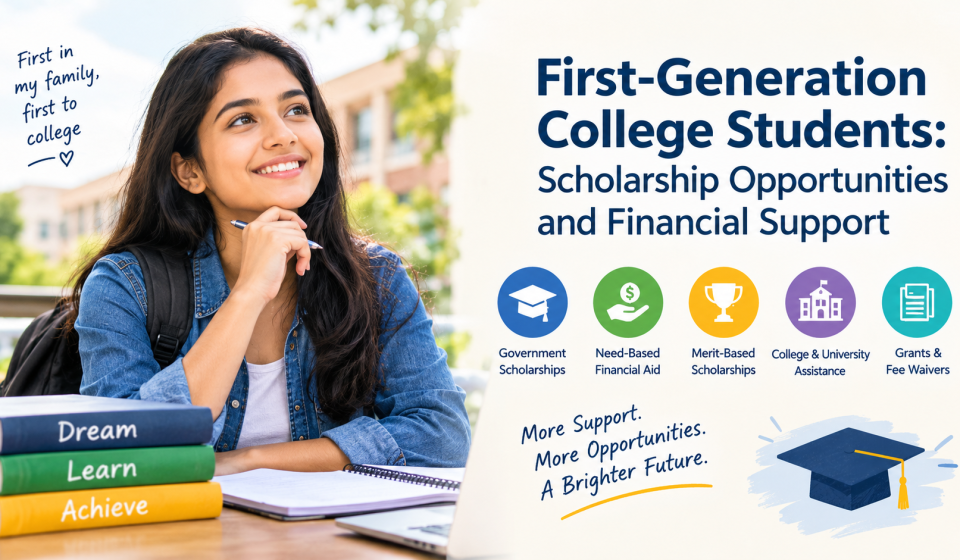

Discover scholarships and financial support for first-generation college students, including government scholarships, grants, fee waivers, and financial aid opportunities to make higher education affordable.
Going to college is an important milestone, especially for students who are the first in their families to pursue higher education. Known as first-generation college students, they may face challenges such as tuition fees, accommodation costs, books, and other educational expenses. They may also have limited access to guidance about college admissions, scholarships, and financial planning.
Fortunately, various government scholarships, private funding programs, grants, and college financial aid opportunities can make higher education more affordable. By understanding the available resources and preparing applications carefully, students can reduce financial pressure and focus on their academic goals.
This article explores scholarship opportunities, financial assistance options, and practical tips to help first-generation college students fund their education.
What Is a First-Generation College Student?
A first-generation college student is generally someone whose parents or guardians have not completed a college degree. However, the exact definition may vary depending on the educational institution or scholarship provider.
These students often navigate unfamiliar processes, including college admissions, financial aid applications, and academic planning. Some may also balance part-time jobs or family responsibilities with their studies.
Despite these challenges, first-generation students bring determination, independence, and a strong desire to build a better future. Access to reliable financial information can help them overcome barriers and make informed educational decisions.
Why Financial Support Matters for First-Generation Students
Higher education involves more than tuition fees. Students may also need to pay for transportation, accommodation, meals, textbooks, internet access, and examination fees.
For families with limited financial resources, these expenses can make college difficult to afford.
Financial assistance can help students in several ways:
- Reduce educational expenses: Scholarships help cover tuition and other eligible costs.
- Improve academic focus: Financial support may allow students to spend more time studying.
- Reduce loan dependency: Scholarships and grants can lower the amount students need to borrow.
- Expand educational opportunities: Financial aid can make professional courses and universities more accessible.
- Support degree completion: Assistance with essential expenses can help students continue their education.
Students should research available programs early because eligibility requirements and application deadlines vary.
1. Government Scholarships for First-Generation Students
Government scholarships are an important source of financial assistance for eligible students. Depending on the country and program, support may be available based on family income, academic performance, social category, disability status, or course of study.
In India, students can explore scholarships through the National Scholarship Portal (NSP), which provides access to participating government scholarship schemes.
Students should review the available schemes carefully because not every program specifically targets first-generation college students.
State Government Scholarships
State governments also offer scholarship schemes for eligible students pursuing higher education. Students studying in Gujarat, for example, can investigate relevant state scholarship programs and check their eligibility requirements.
Some schemes provide assistance to students from economically disadvantaged families or particular social categories. Others may support students enrolled in specific courses.
Applicants should verify current eligibility conditions, application deadlines, and documentation requirements through official government sources before applying.
2. Need-Based Scholarships and Financial Aid
Need-based scholarships support students whose financial circumstances make higher education difficult to afford.
Eligibility may depend on family income, household responsibilities, educational expenses, and other financial considerations.
First-generation students may benefit from these programs, particularly when their families cannot comfortably cover college fees.
To find suitable opportunities, students should contact their college’s financial aid office or student welfare department. They can also research recognized charitable foundations, educational trusts, and nonprofit organizations.
Before applying, check whether the award covers tuition, accommodation, books, or other expenses. Some programs provide one-time assistance, while others offer support throughout the academic year.
3. Merit-Based Scholarships
Merit-based scholarships reward students for academic achievements, exceptional abilities, leadership, or participation in relevant activities.
These scholarships may consider school examination results, college grades, entrance examination scores, or other achievements.
First-generation students should not assume that financial difficulties or limited family guidance make them less competitive.
To strengthen an application, students should maintain good academic records, collect certificates, highlight relevant achievements, and explain their educational goals clearly.
Some merit-based scholarships also consider extracurricular participation or community service. Students should review each program’s selection criteria to understand what matters most.
4. College and University Financial Assistance
Many colleges and universities provide scholarships, tuition concessions, fee waivers, or other financial assistance to eligible students.
These opportunities may depend on academic performance, family income, special circumstances, or institutional policies.
Students should contact their college administration and ask:
- Are scholarships available for first-generation students?
- Does the college offer financial assistance based on family income?
- Are fee concessions available?
- Can students receive emergency financial support?
- What documents and deadlines apply?
Even if a college does not offer a scholarship specifically for first-generation students, applicants may qualify for general financial assistance.
Contacting the relevant department early can help students discover opportunities they might otherwise miss.
5. Private Scholarships and Nonprofit Organizations
Private companies, charitable foundations, and nonprofit organizations also support students pursuing higher education.
Their scholarship programs may focus on financial need, academic performance, professional courses, or students from underserved communities.
For example, India’s Foundation for Excellence supports eligible students pursuing certain professional degree programs, subject to its current eligibility requirements.
Students can also investigate educational trusts, local charitable organizations, and corporate foundations.
Before applying, verify the organization’s credibility, scholarship conditions, and selection process. Be cautious of suspicious offers that demand unexplained payments or promise guaranteed scholarships.
6. Grants, Fee Waivers, and Other Financial Support
Scholarships are not the only way to reduce college expenses. First-generation students can explore additional forms of financial assistance.
Educational grants: Grants provide financial support to eligible students under specific conditions. Unlike conventional loans, grants generally do not require repayment when recipients comply with the applicable terms.
Tuition fee waivers: Some institutions reduce or waive tuition fees for students who meet their financial or academic criteria.
Work-study opportunities: Eligible students may find part-time work on campus, such as library assistance, administrative work, or research support. They should ensure that employment does not interfere with their studies.
Emergency financial assistance: Some colleges and charitable organizations help students facing unexpected financial difficulties.
Students should compare these options and confirm their eligibility before making financial decisions.
7. Scholarships for International Students
First-generation students planning to study abroad may also qualify for university scholarships and other financial assistance.
However, opportunities depend on the destination country, university, citizenship, academic program, and individual eligibility.
Students should research universities offering financial aid to international applicants and check whether scholarships cover full tuition or only a portion of the fees.
They should also calculate accommodation, transportation, insurance, food, and travel expenses.
Applying early is important because some scholarships have deadlines separate from university admission deadlines.
Students should compare the total cost of attending different institutions rather than choosing a university based only on its scholarship amount.
8. Documents Required for Scholarship Applications
Preparing documents in advance can make the application process easier and help students avoid missing deadlines.
Commonly requested documents include:
- Academic marksheets and certificates.
- College admission or enrollment proof.
- Family income certificate, where required.
- Identity and address documents.
- Bank account details, when officially requested.
- Recent passport-size photographs.
- Category or disability certificates, if applicable.
- Recommendation letters or personal statements, where required.
Requirements differ between scholarship programs. Students should consult the official guidelines and ensure that all information is accurate.
They should also keep digital copies of important documents and save application confirmation details for future reference.
9. Tips for Submitting a Strong Scholarship Application
A well-prepared scholarship application explains the student’s educational goals, achievements, and financial needs when relevant.
Follow these practical tips:
Explain your goals: Describe your course, career ambitions, and how financial assistance will support your education.
Highlight your achievements: Include academic results, personal projects, extracurricular activities, volunteering, or leadership experience.
Be honest about financial circumstances: Provide accurate information and supporting documents when required.
Follow application instructions: Check eligibility conditions, document formats, and submission deadlines carefully.
Apply for multiple opportunities: Research different scholarships rather than relying on a single award.
Review before submitting: Check spelling, personal details, uploaded documents, and other application information.
Students should also save copies of submitted applications and regularly check for updates from scholarship providers.
10. Common Scholarship Mistakes to Avoid
Small mistakes can prevent students from receiving financial assistance.
Avoid these common problems:
- Missing deadlines: Maintain a calendar of application dates.
- Ignoring eligibility rules: Confirm that you meet the requirements before applying.
- Submitting incorrect information: Review every detail carefully.
- Applying to only one program: Explore multiple suitable opportunities.
- Overlooking college assistance: Ask your institution about available scholarships and fee concessions.
- Trusting unverified offers: Use official websites and recognized organizations.
Staying organized and verifying information can make the scholarship application process more manageable.
Conclusion
First-generation college students may face financial challenges when pursuing higher education, but several funding opportunities can help them achieve their goals.
Government scholarships, need-based awards, merit-based assistance, university financial aid, private foundations, grants, and fee waivers can reduce educational expenses for eligible students.
The best approach is to research opportunities early, understand eligibility requirements, prepare documents in advance, and apply to multiple suitable programs. Students should also contact their colleges for guidance and verify scholarship information through official sources.
Being the first person in a family to attend college is a significant achievement. With careful planning, reliable financial information, and consistent effort, first-generation students can make higher education more affordable and build a stronger future.
Frequently Asked Questions (FAQs)
1. What is a first-generation college student?
A first-generation college student is generally someone whose parents or guardians have not completed a college degree. Definitions may vary by institution and scholarship provider.
2. Can first-generation students receive scholarships in India?
Yes. Eligible students can explore government scholarships, state schemes, university financial aid, and private foundation programs. Requirements vary by scholarship.
3. Are scholarships available specifically for first-generation students?
Some colleges and organizations offer scholarships specifically for first-generation students. Others provide general financial assistance based on income, academic performance, or other eligibility criteria.
4. Where can Indian students find government scholarships?
Students can explore participating government scholarship schemes through the National Scholarship Portal and investigate relevant state government programs.
5. Can students apply for scholarships without excellent grades?
Yes. Some scholarships prioritize financial need or other circumstances rather than academic performance alone. Students should review individual eligibility requirements.
6. Do scholarships need to be repaid?
Scholarships generally do not require repayment when recipients follow the award’s conditions. Students should check the terms of any financial assistance program before accepting it.
7. How can students avoid scholarship scams?
Apply through official websites and recognized organizations. Verify the provider’s identity, avoid suspicious payment demands, and never share sensitive information with unverified sources.